

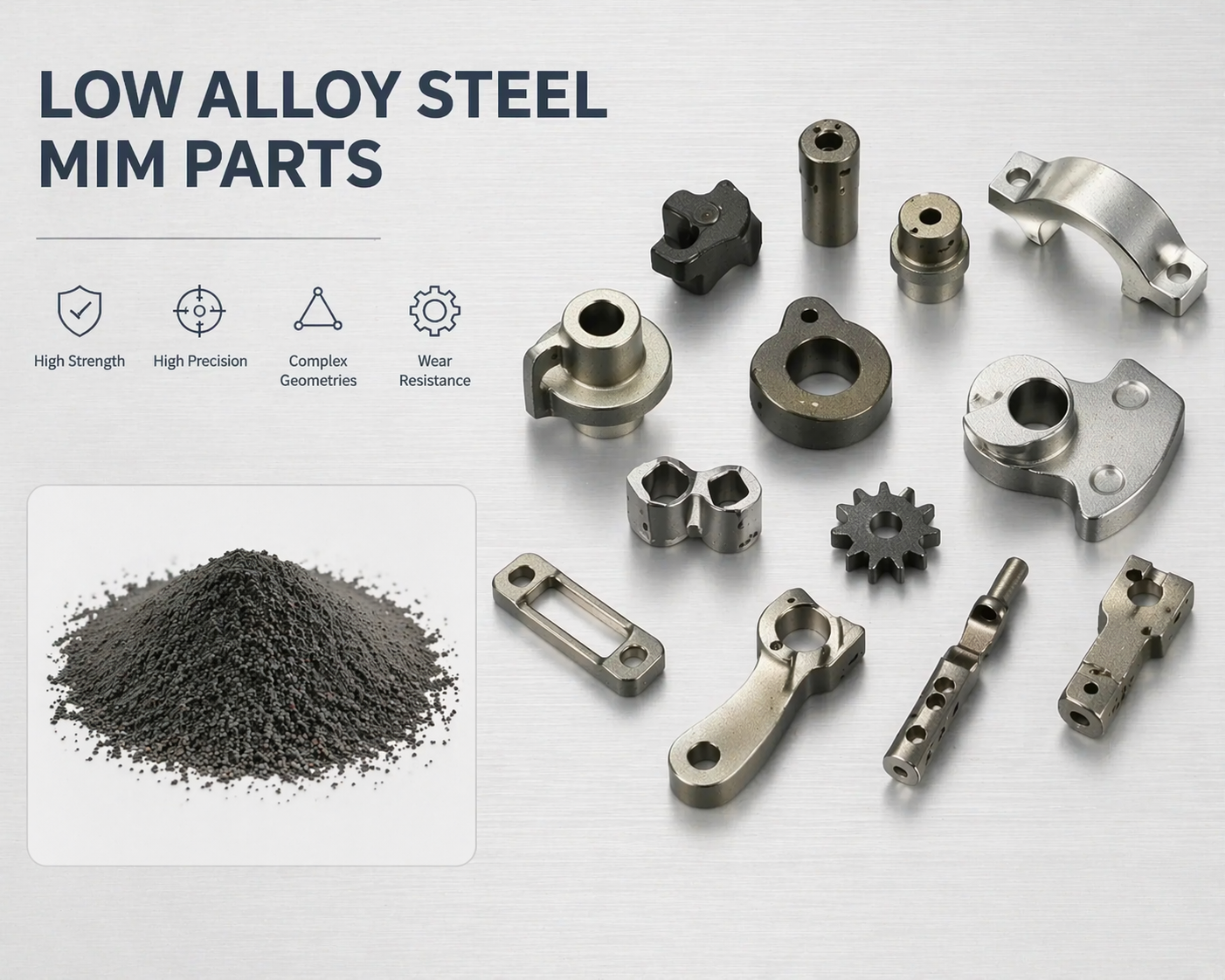
Low Alloy Steel Materials in Metal Injection Molding (MIM)
Specialize in low alloy steel materials for MIM parts that require high strength, toughness, and stable performance. With excellent mechanical properties and support for complex geometries, we help you develop reliable components for demanding applications.
- High Strength and Toughness
- Good Wear Resistance
- Suitable for Complex Parts
- Cost-Effective Mass Production
MIM Low Alloy Steels and Applications
XY-GLOBAL offers a selection of MIM low alloy steels for precision parts that demand strength, toughness, and dependable performance. Our materials support a wide range of applications and help you achieve the right balance of properties for your MIM machined components.
MIM 4605
MIM 4605 is a Ni-Mo based low alloy steel known for its good strength, toughness, and heat-treatability. It is well suited for structural and wear-resistant MIM parts that require reliable performance.
MIM 4140
MIM 4140 is a chromium-molybdenum low alloy steel widely used for mechanical parts that need a balance of strength, hardness, and toughness. It is a practical choice for shafts, gears, and other load-bearing components.
MIM 4340
MIM 4340 is a Ni-Cr-Mo low alloy steel designed for high-strength and high-toughness applications. It is often selected for demanding parts exposed to higher stress and impact loads.
MIM 8620
MIM 8620 is a case-hardening low alloy steel that offers strong core performance and excellent surface hardness after carburizing. It is ideal for gears, cams, and other wear-resistant components.
Fe-2Ni
Fe-2Ni is a nickel-alloyed steel with good strength and dimensional stability, suitable for precision MIM parts that require balanced mechanical performance
Fe-4Ni
Fe-4Ni offers improved strength and hardness compared with lower-nickel grades, making it a practical choice for load-bearing MIM components.
Fe-8Ni
Fe-8Ni provides higher strength and better hardenability, and is commonly used for MIM parts that need stable mechanical performance after heat treatment.
FeNi7
FeNi7 is a nickel-bearing low alloy steel designed for applications that require a good balance of toughness, strength, and dimensional control.
MIM Low Alloy Steel Grades and Properties
Low alloy steels for MIM are widely used for precision parts that require strength, toughness, wear resistance, and cost-effective mass production. Their properties can be further improved through heat treatment, making them a practical choice for structural and functional components (HT / Q&T: Refers to Heat Treatment or Quenching & Tempering processes used to enhance mechanical strength).
| Alloy | Microstructure / Type | Main Composition | Density (g/cm³) | Tensile Strength (MPa) | Yield Strength (MPa) | Hardness | Elongation (%) | Best For |
|---|---|---|---|---|---|---|---|---|
| MIM 4605 | Low alloy steel, Ni-Mo based | Fe, C, Ni, Mo | ≥ 7.50 | As-sintered: ~600; HT: significantly higher | As-sintered: ~230; HT: significantly higher | ~100 HRB (As-sintered); higher after HT | ≥ 10 | High-strength structural parts, wear-resistant components |
| MIM 4140 | Chromium-molybdenum low alloy steel | Fe, C, Cr, Mo | ~7.80 | Medium to high (Dep. on HT) | Medium to high (Dep. on HT) | Hardenable via HT | Moderate | Shafts, gears, mechanical parts |
| MIM 4340 | Ni-Cr-Mo low alloy steel | Fe, C, Ni, Cr, Mo | ~7.80 | High (Especially after Q&T) | High after HT | High hardness after HT | Moderate | High-stress parts, tough structural components |
| MIM 8620 | Case-hardening low alloy steel | Fe, C, Ni, Cr, Mo | ~7.80 | Moderate core strength; high surface hardness | Good core strength after case hardening | High surface hardness after carburizing | Good | Gears, cams, bushings, wear-resistant parts |
| Fe-Ni based | Iron-nickel low alloy family | Fe, Ni, (Cr, Mo) | 7.55 – 7.65 | Varies by grade | Varies by grade | Adjustable by HT | Moderate to good | Precision structural parts, balanced strength/toughness |
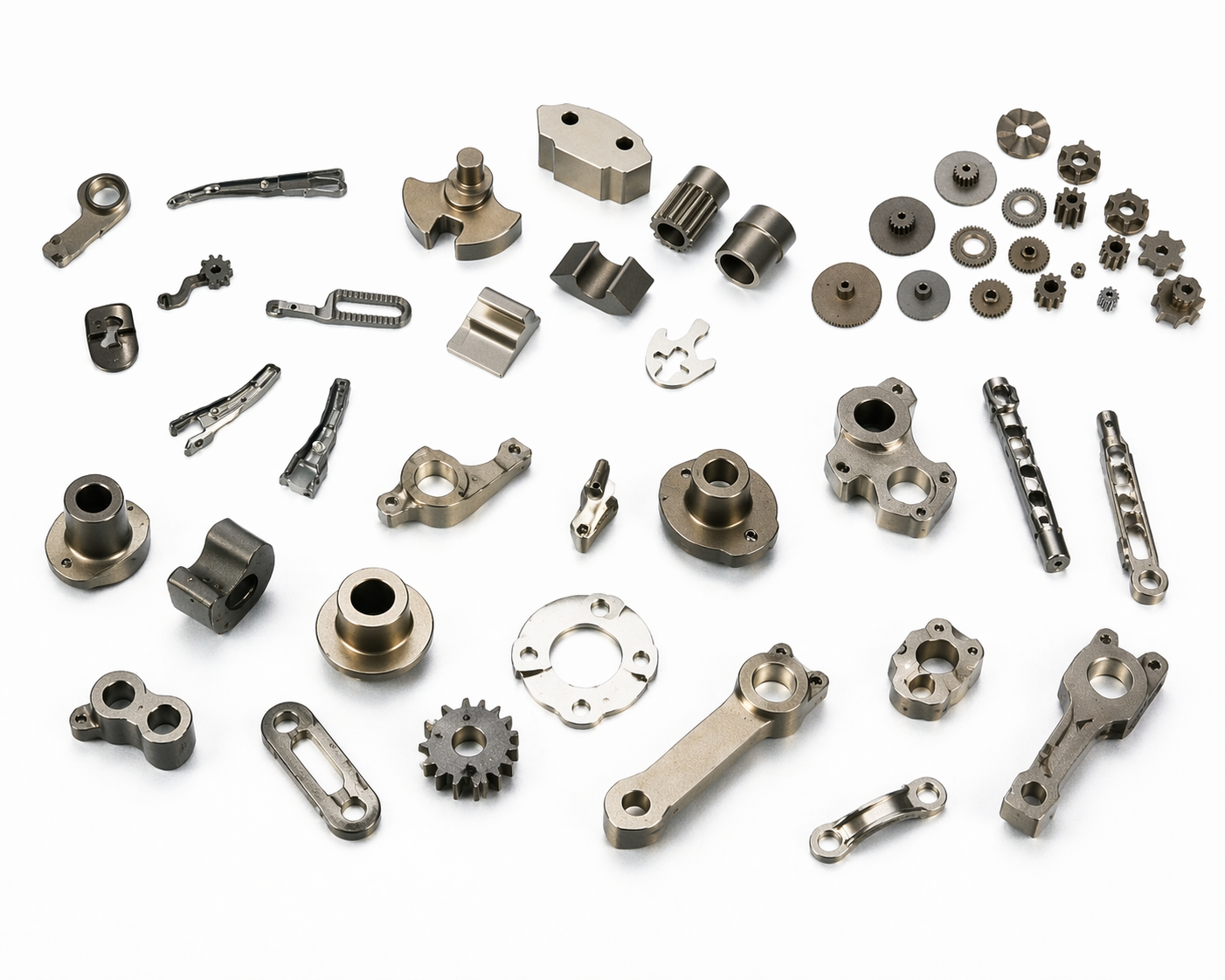
Why Choose Low Alloy Steel for MIM Parts
Low alloy steel is a practical choice for MIM parts that require high strength, good toughness, and reliable structural performance. Compared with standard carbon steel, it can offer improved mechanical properties while remaining cost-effective for large-scale production.
- High Strength: Ideal for parts that need reliable load-bearing performance.
- Good Toughness: Helps components withstand impact and stress.
- Excellent Wear Resistance: Suitable for moving parts and high-friction applications.
- Heat-Treatable: Can be further enhanced to meet specific performance needs.
- Stable Dimensional Accuracy: Supports consistent quality in precision parts.
- Suitable for Structural Components: Well suited for functional and load-bearing designs.