

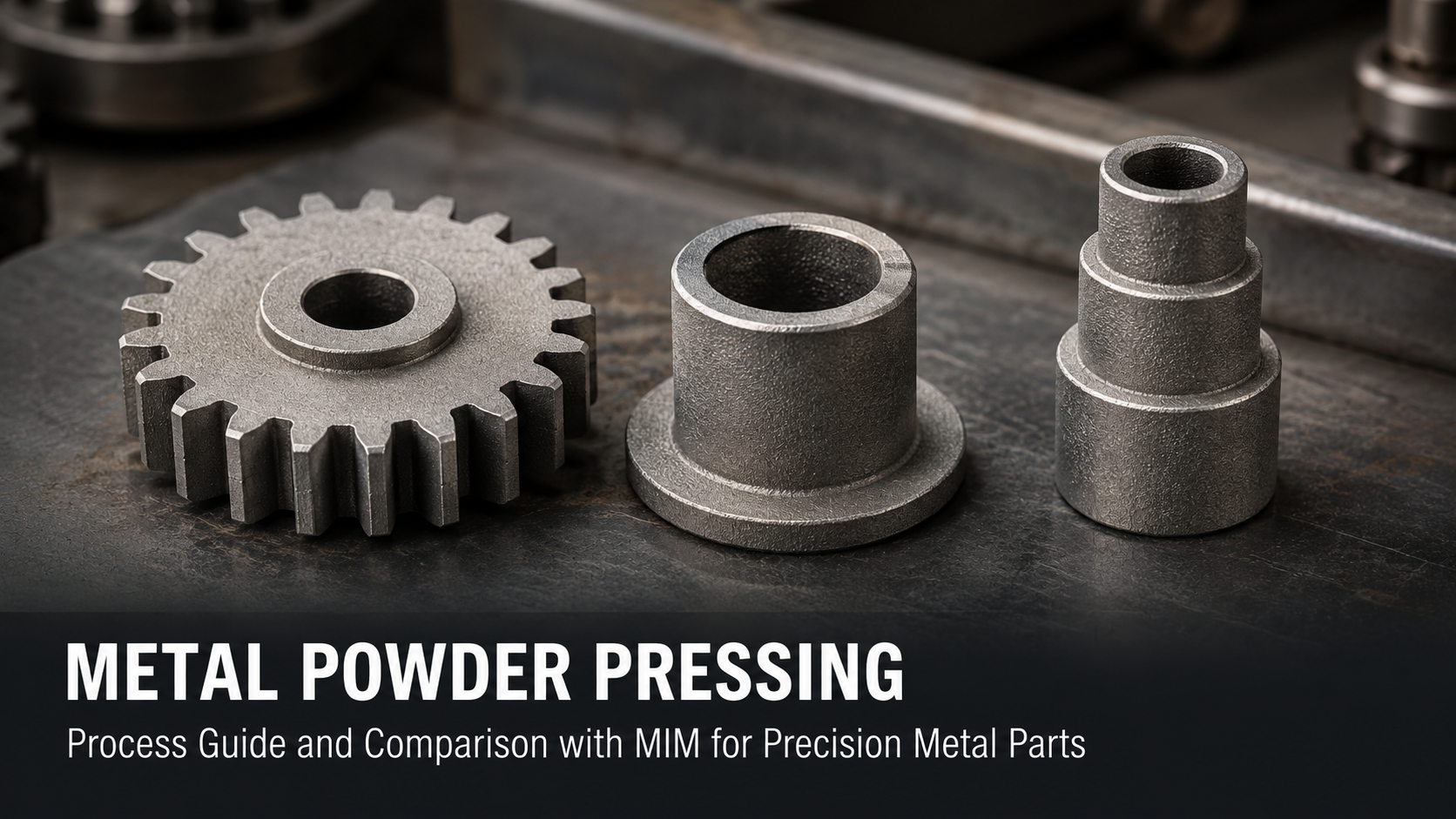
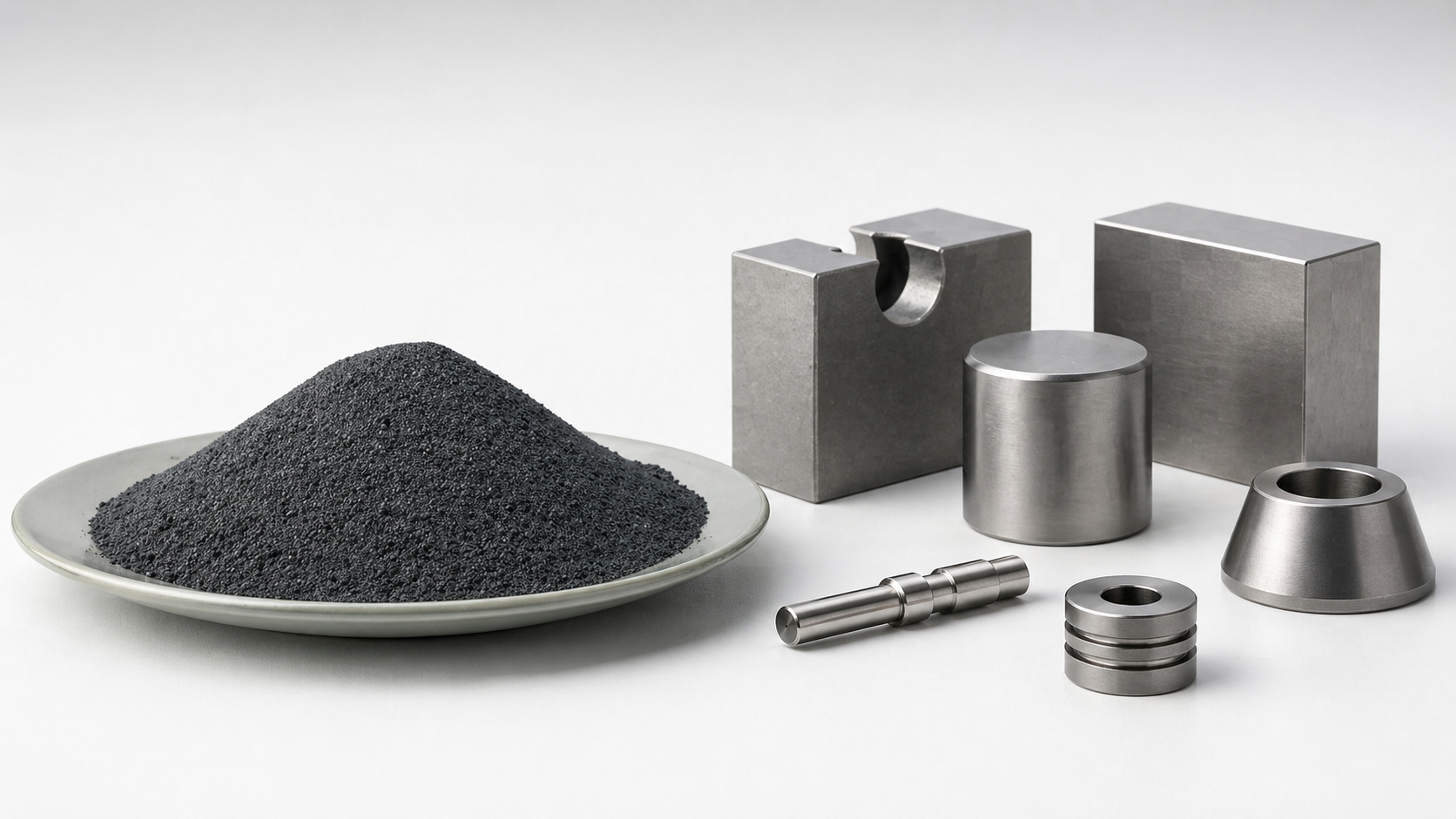
Metal powder pressing is one of the foundational processes in powder metallurgy — a manufacturing route that converts metal powder directly into near-net-shape parts through compaction and sintering, without melting. It is fast, scalable, and cost-effective for the right part geometries, and it has been widely used for decades in automotive, industrial, and consumer product applications.
But metal powder pressing has geometry constraints that are fundamental to the process itself. Parts must be extractable from a die along a single axis. Undercuts, cross-holes, internal channels, and complex three-dimensional profiles are not achievable by pressing. When a design requires these features, either the geometry is simplified or significant secondary machining is added — both of which increase total cost.
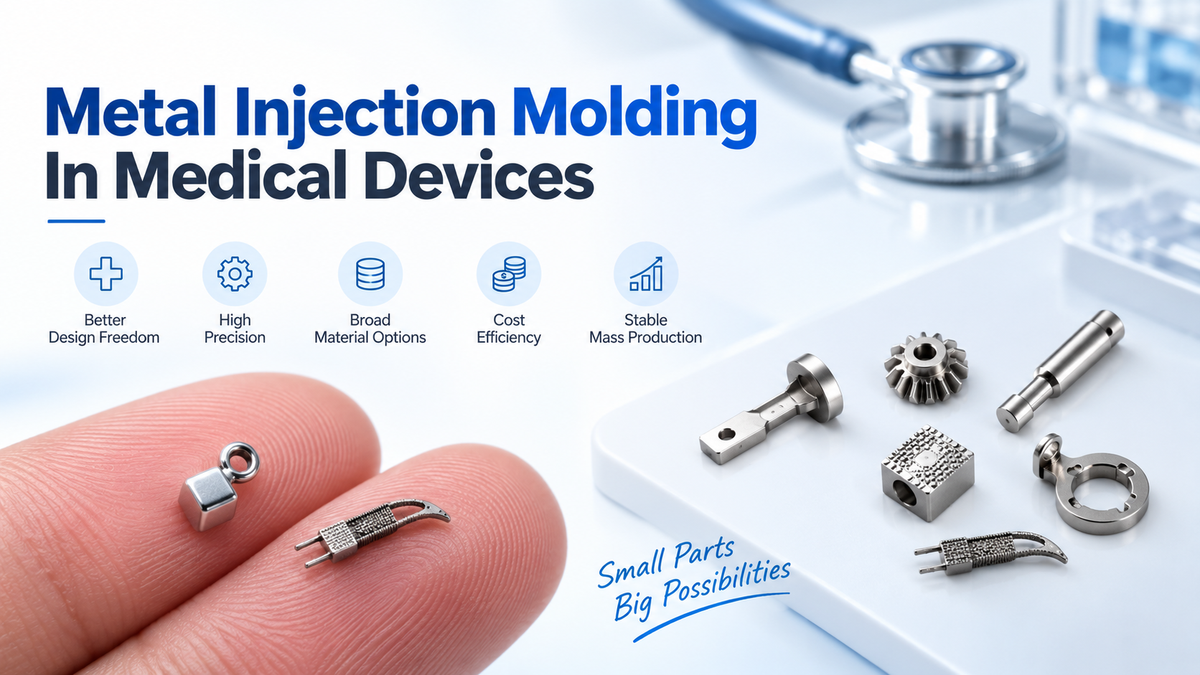
Metal Injection Molding (MIM) was developed specifically to address these limitations. MIM applies the same powder metallurgy principles — powder, binder, sintering — but uses injection molding instead of die pressing, enabling full three-dimensional geometry at near-theoretical density. Understanding where powder pressing excels and where MIM takes over is fundamental to selecting the right process for any precision metal component.

What Is Metal Powder Pressing?
Metal powder pressing — also called die compaction, press and sinter, or conventional PM — is a process in which loose metal powder is poured into a rigid die and compacted under high pressure to form a self-supporting green compact. The compact is then sintered in a furnace to bond the powder particles and develop final mechanical properties.
Process Overview
The four stages of metal powder pressing are:
- Powder filling: Metal powder, typically blended with lubricants to reduce die wear, is metered into the die cavity.
- Compaction: Upper and lower punches compress the powder at pressures of 400–800 MPa, depending on the material and target density. The green compact holds its shape due to mechanical interlocking of the powder particles.
- Ejection: The green compact is ejected from the die. At this stage the part is fragile and must be handled carefully.
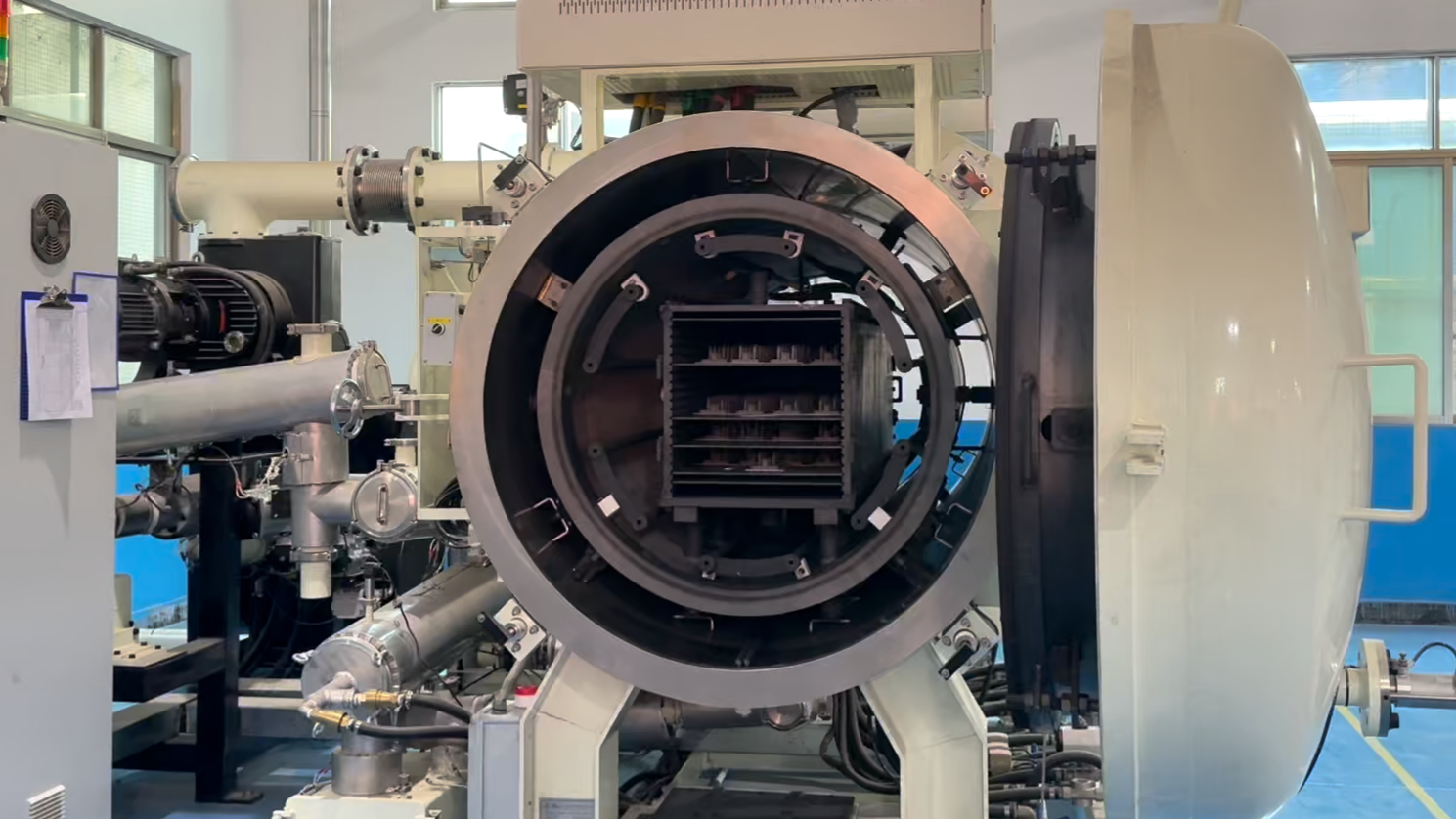
- Sintering: Green compacts are loaded onto sintering trays and processed in a continuous belt or batch furnace at temperatures of 1,100–1,300°C for iron-based materials. Sintering bonds the powder particles, removes lubricant, and develops the final microstructure and mechanical properties.
Optional post-processing steps include sizing and coining for improved dimensional accuracy, secondary machining for features not formable by pressing, heat treatment for enhanced mechanical properties, and oil impregnation for self-lubricating bearing applications.
Materials Available for Powder Pressing
Iron-based materials dominate powder pressing production volume: plain iron, iron-copper, iron-nickel-molybdenum, and diffusion-alloyed grades cover the majority of structural PM applications. Stainless steel grades 316L and 303 are also powder-pressed for corrosion-resistant applications. Copper-based materials — bronze and brass — are pressed for bearings, bushings, and electrical contacts. Soft magnetic iron-silicon and iron-nickel grades are pressed for electromagnetic components.
Mechanical Properties of Powder Pressed Parts
The mechanical properties of powder-pressed parts are directly related to sintered density. Standard powder pressing achieves sintered densities of 85–93% of theoretical — meaning 7–15% of the part volume remains as porosity. This residual porosity reduces tensile strength, fatigue strength, and ductility compared to wrought or MIM material of the same composition.
A typical sintered Fe-2Cu-0.8C PM steel achieves ultimate tensile strength of 400–550 MPa, yield strength of 300–400 MPa, and elongation of 1–3%. The equivalent MIM low-alloy steel, sintered to 96–99% density, achieves UTS of 900–1,100 MPa after heat treatment. The difference is a direct result of the density gap between the two processes.
High-density PM variants — warm compaction, double press/double sinter, and sinter-HIP — can push sintered density above 97%, substantially closing the gap with MIM. However, these processes increase cost significantly and are typically reserved for high-performance applications where conventional PM density is insufficient but the geometry remains too simple to justify MIM tooling cost.

Geometry Capabilities and Limitations of Powder Pressing
The geometry of powder-pressed parts is governed by one fundamental constraint: the part must be compacted from above and ejected downward from the die without interference. This means every feature on the part must be achievable by punch motion along a single vertical axis.
In practice, this means:
- No undercuts: any feature that would prevent the part from being ejected straight out of the die cannot be formed by pressing. This includes side holes, angled features, and protruding details on the part side.
- No cross-holes or transverse features: holes perpendicular to the pressing direction require secondary drilling after sintering.
- No internal channels or cavities: hollow internal geometries in the pressing direction are achievable with core rods; truly enclosed internal volumes are not.
- Limited depth-to-diameter ratio: deep, narrow features parallel to the pressing axis are difficult to fill uniformly and produce density gradients. Maximum depth-to-diameter ratio for blind features is typically 3:1 to 4:1.
- Uniform or stepped cross-sections only: the part cross-section can vary along the pressing axis using multiple punches, but complex organic profiles and curved sidewalls are not achievable.
For parts that fit within these constraints — gears with spur teeth, plain bushings, simple flanges, stepped shafts, flat brackets — powder pressing is highly efficient. For parts that require any of the features listed above, the options are: accept the geometric limitation and redesign, add secondary machining operations, or switch to a process without these constraints.
When Metal Powder Pressing Is the Right Choice
Powder pressing delivers its best value for parts that combine geometric simplicity with high production volume. Common applications include:
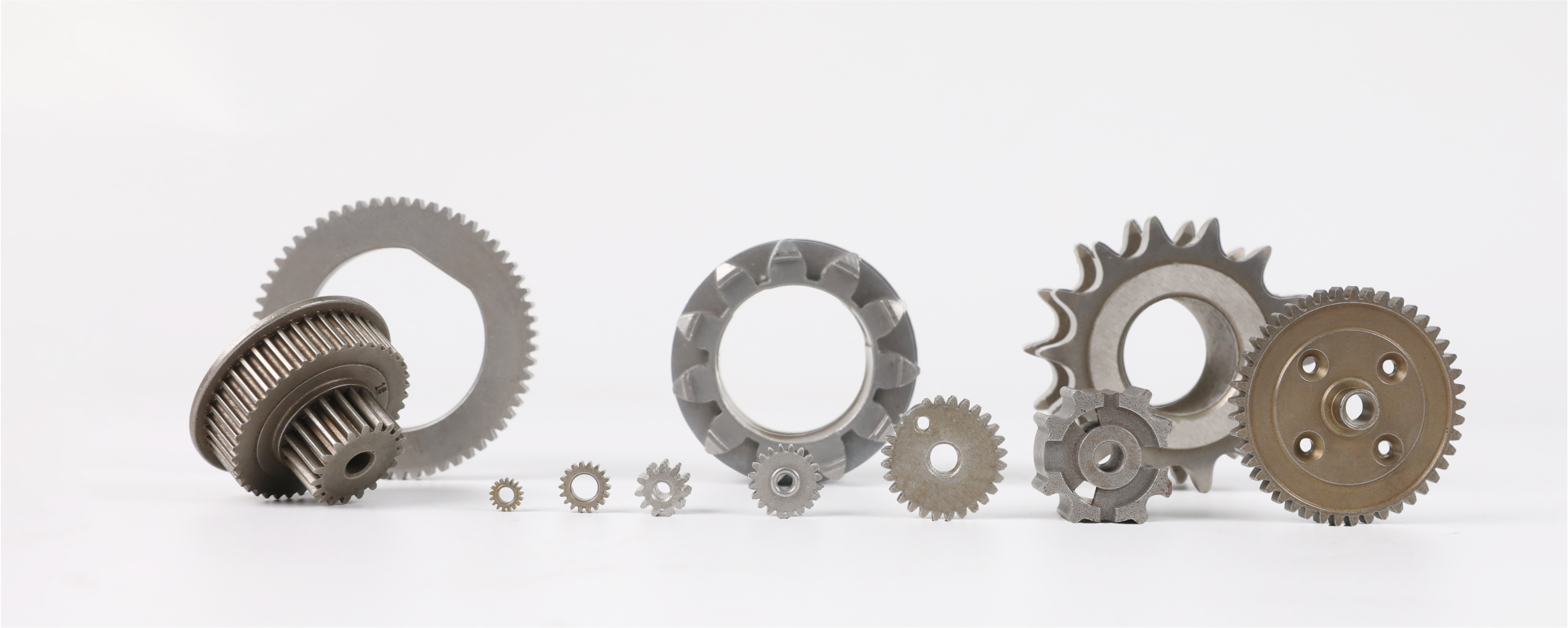
- Automotive transmission and engine components: sintered gears, sprockets, connecting rod caps, valve seat inserts, and bearing caps — simple profiles produced in very high volumes where PM's per-piece cost at millions of parts per year is unmatched
- Self-lubricating bearings and bushings: intentional porosity in PM bronze or iron bushings is filled with oil during impregnation, providing continuous lubrication from within the material — a property achievable only with a porous PM structure
- Soft magnetic components: iron-silicon and iron-nickel PM parts for electromagnetic assemblies, where the isotropic powder structure provides consistent magnetic properties
- Simple structural brackets and fasteners: large-volume parts with straightforward geometry where PM pressing cost is well below alternative processes
Parts weighing between 5 g and 2 kg with cross-sections that fit die geometry, at volumes above approximately 20,000–50,000 per year, are typically well-suited to powder pressing.

When MIM Outperforms Powder Pressing
Complex Three-Dimensional Geometry
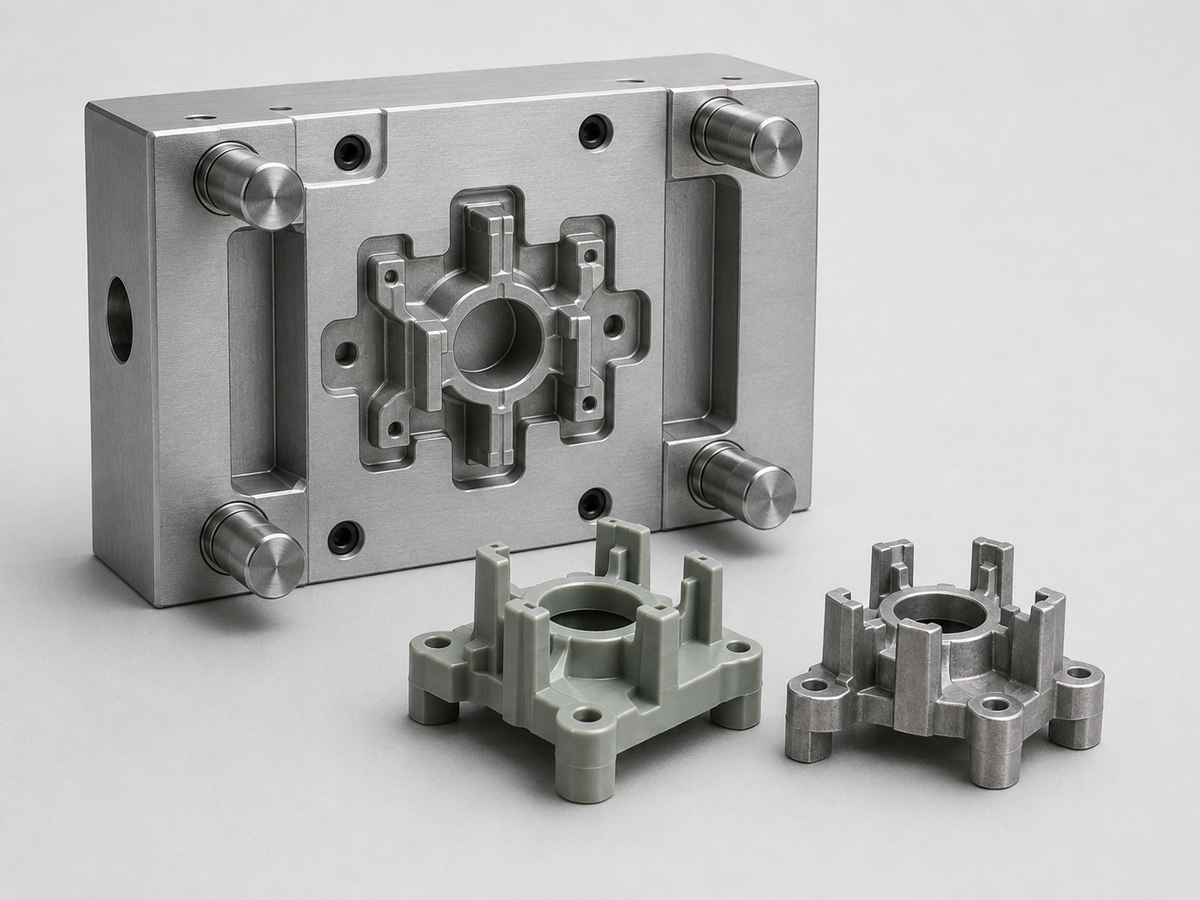
MIM uses injection molding to form the green part, which means geometry is limited by what can be injected and ejected from a mold — the same constraint as plastic injection molding. Undercuts (achievable with side actions or slides), internal channels, cross-holes, threaded features, and complex curved profiles are all standard MIM geometries. A part that requires post-pressing secondary machining to add cross-holes, threads, or undercuts in PM is often more cost-effective as a single MIM operation that produces all features as-sintered.
Higher Density and Mechanical Performance
MIM achieves sintered densities of 96–99% of theoretical — effectively the same as wrought or cast material of the same composition. Mechanical properties correspondingly approach wrought equivalents. For parts subject to dynamic loading, fatigue, impact, or high tensile stress where PM's residual porosity causes premature failure, MIM parts deliver the mechanical performance at production volume that wrought machining delivers at low volume.
Small, Intricate Parts with Fine Detail
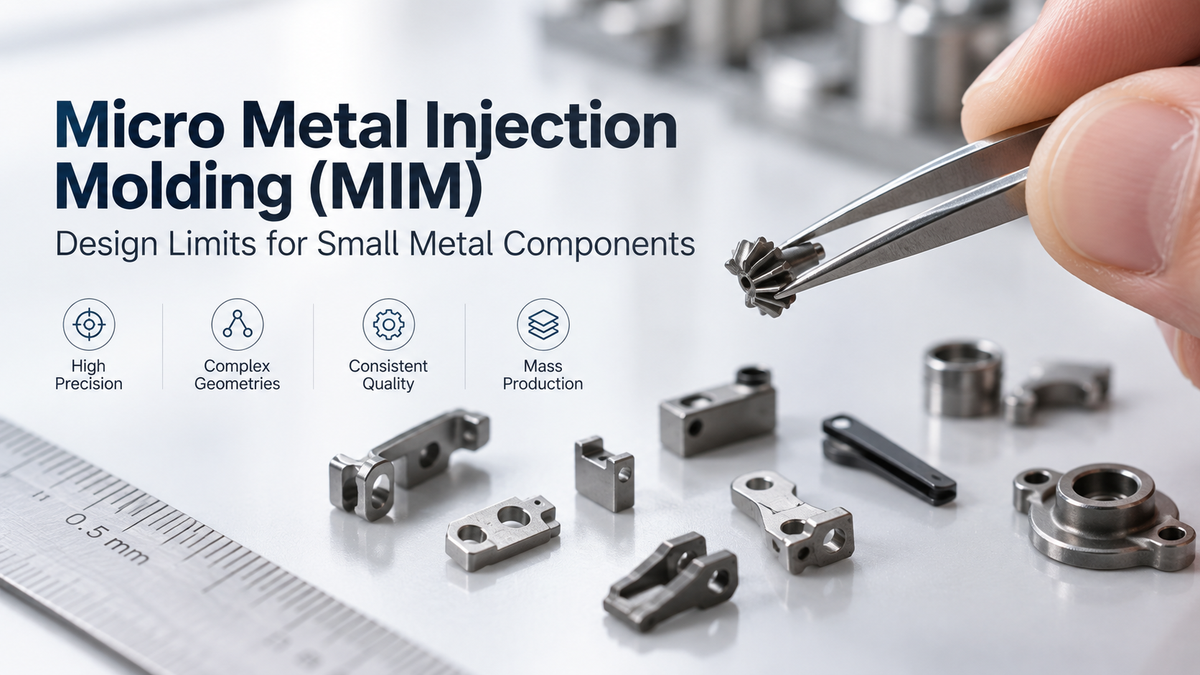
MIM is most cost-competitive for parts below approximately 100 g with complex geometry. As part weight decreases and feature complexity increases, the cost advantage of MIM over both PM pressing and machining grows significantly. Powder pressing becomes less efficient at very small scales due to die filling consistency; MIM maintains high dimensional repeatability at sub-gram part weights.
Materials Not Suited to Pressing
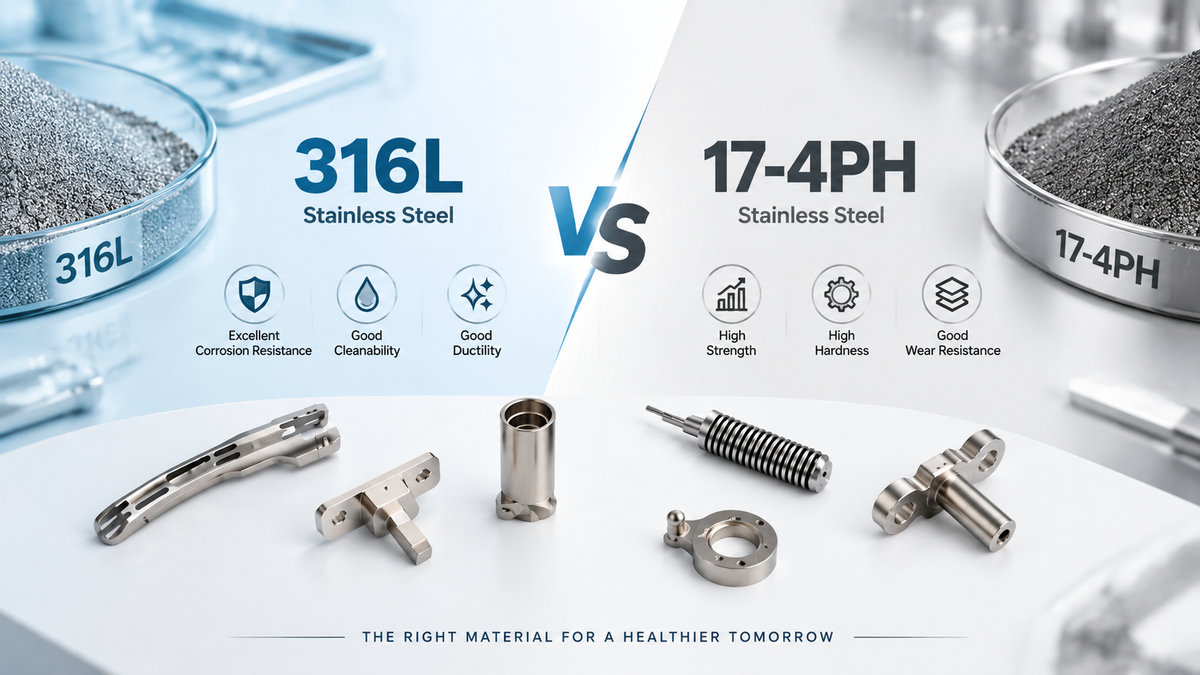
Precipitation-hardening stainless steels (17-4PH), titanium alloys (Ti-6Al-4V), cobalt-chrome, and tungsten alloys are difficult or impractical to press and sinter with conventional PM equipment. MIM processes these materials routinely, producing high-density parts with the full mechanical properties achievable from the alloy system.
Metal Powder Pressing vs MIM: Direct Comparison
- Geometry: Powder pressing — 2.5D only, no undercuts or cross-features. MIM — full 3D, undercuts, cross-holes, internal features.
- Sintered density: Powder pressing — 85–93% typical. MIM — 96–99%.
- Mechanical strength: Powder pressing — reduced by porosity, 60–80% of wrought equivalent. MIM — near-wrought properties.
- Minimum wall thickness: Powder pressing — 1.5–2 mm. MIM — 0.5 mm.
- Part weight range: Powder pressing — cost-effective across a wide range. MIM — most cost-effective below 100 g.
- Thread features: Powder pressing — secondary tapping required. MIM — threads moldable as-sintered.
- Tooling cost: Powder pressing — lower for simple dies. MIM — higher, reflecting greater mold complexity.
- Unit cost for simple geometry at high volume: Powder pressing wins. MIM unit cost is higher for geometries that pressing handles efficiently.
- Unit cost for complex geometry: MIM wins, because powder pressing requires multiple secondary operations that add cost per part and are eliminated by MIM.
- Surface finish as-sintered: Powder pressing — Ra 1.6–3.2 µm. MIM — Ra 0.8–1.6 µm.
Application Case: Structural Bracket Converted from PM to MIM
A customer producing a small structural bracket for a locking mechanism was manufacturing the part by powder pressing, then drilling three cross-holes and tapping two threaded features as secondary operations. The PM part cost included the sintered blank, two machining operations, tooling amortization across three setups, and in-process scrap from breakage during machining of the sintered blank.
At the customer's volume of 18,000 pieces per year, we reviewed the geometry for MIM feasibility. The bracket was 22 g, well within the MIM cost-effective weight range. The three cross-holes and two threaded features were all formable as-sintered by MIM. The redesigned MIM part eliminated both secondary operations entirely.
MIM tooling cost was higher than the original PM die, but amortized over the annual volume the per-piece MIM cost — including the as-sintered holes and threads — was lower than the total PM part cost including secondary machining. The MIM part also achieved higher sintered density (97.8% vs the PM part's 89%), improving fatigue life in the application.

How to Decide Between Powder Pressing and MIM
The decision simplifies to three questions:
Does your part geometry require any feature that cannot be formed by pressing in one axis? Cross-holes, undercuts, internal channels, molded threads — if yes, MIM is the correct process or secondary machining will add substantial cost to PM.
Does your application require near-wrought mechanical properties? If strength, fatigue life, or ductility are critical and PM's 85–93% density is insufficient, MIM delivers the density and properties required.
Is your part weight below 100 g? Below this threshold, MIM's per-piece economics are typically competitive with PM for comparable complexity. Above this weight, PM pressing usually has a cost advantage for geometries it can form.
If all three answers are no — simple geometry, moderate density acceptable, part weight above 100 g at high volume — powder pressing is likely the right choice. If any answer is yes, MIM is worth evaluating seriously.
FAQ
What is metal powder pressing used for?
Metal powder pressing is used to produce high-volume metal components with relatively simple geometry — gears, bushings, bearings, brackets, flanges, and structural inserts in automotive, industrial, and consumer applications. It is most cost-effective for parts that fit within the process's geometric constraints at volumes above approximately 20,000–50,000 per year.
How does powder pressing differ from Metal Injection Molding?
In powder pressing, metal powder is compacted in a die under high pressure, limiting geometry to shapes extractable along one axis. In MIM, metal powder mixed with binder is injection molded, allowing full three-dimensional geometry including undercuts, cross-holes, and internal features. MIM also achieves higher sintered density (96–99% vs 85–93%) and correspondingly better mechanical properties.
Can powder-pressed parts match MIM in strength?
Standard powder pressing achieves 85–93% theoretical density, resulting in reduced strength compared to MIM or wrought material. High-density PM variants such as warm compaction or sinter-HIP can approach MIM density levels at significantly higher process cost. For most applications requiring near-wrought mechanical properties in a complex geometry, MIM is the more practical route to both the properties and the shape simultaneously.
What materials can be processed by powder pressing?
Iron-based alloys (plain iron, iron-copper, iron-nickel-molybdenum, diffusion-alloyed grades), stainless steels (316L, 303), copper alloys (bronze, brass), and soft magnetic iron alloys are the most commonly pressed materials. Titanium alloys, precipitation-hardening stainless steels, and cobalt-chrome alloys are generally better suited to MIM due to pressing difficulties and the higher density requirements of these alloy systems.
Summary
Metal powder pressing is a well-established and highly cost-efficient process for the geometries it can serve. When a part design moves beyond those geometric boundaries — or when mechanical performance requirements demand near-full density — MIM provides the same powder metallurgy foundation with the geometry freedom and density that pressing cannot achieve. If you have a part currently produced by powder pressing with secondary operations, or a new design with complex features, contact us to evaluate whether MIM would reduce total part cost and improve performance.
Share:
Silicon Carbide Ceramic Parts: Custom SiC Components by Ceramic Injection Molding
Copper Injection Molding for Custom Copper MIM Parts