

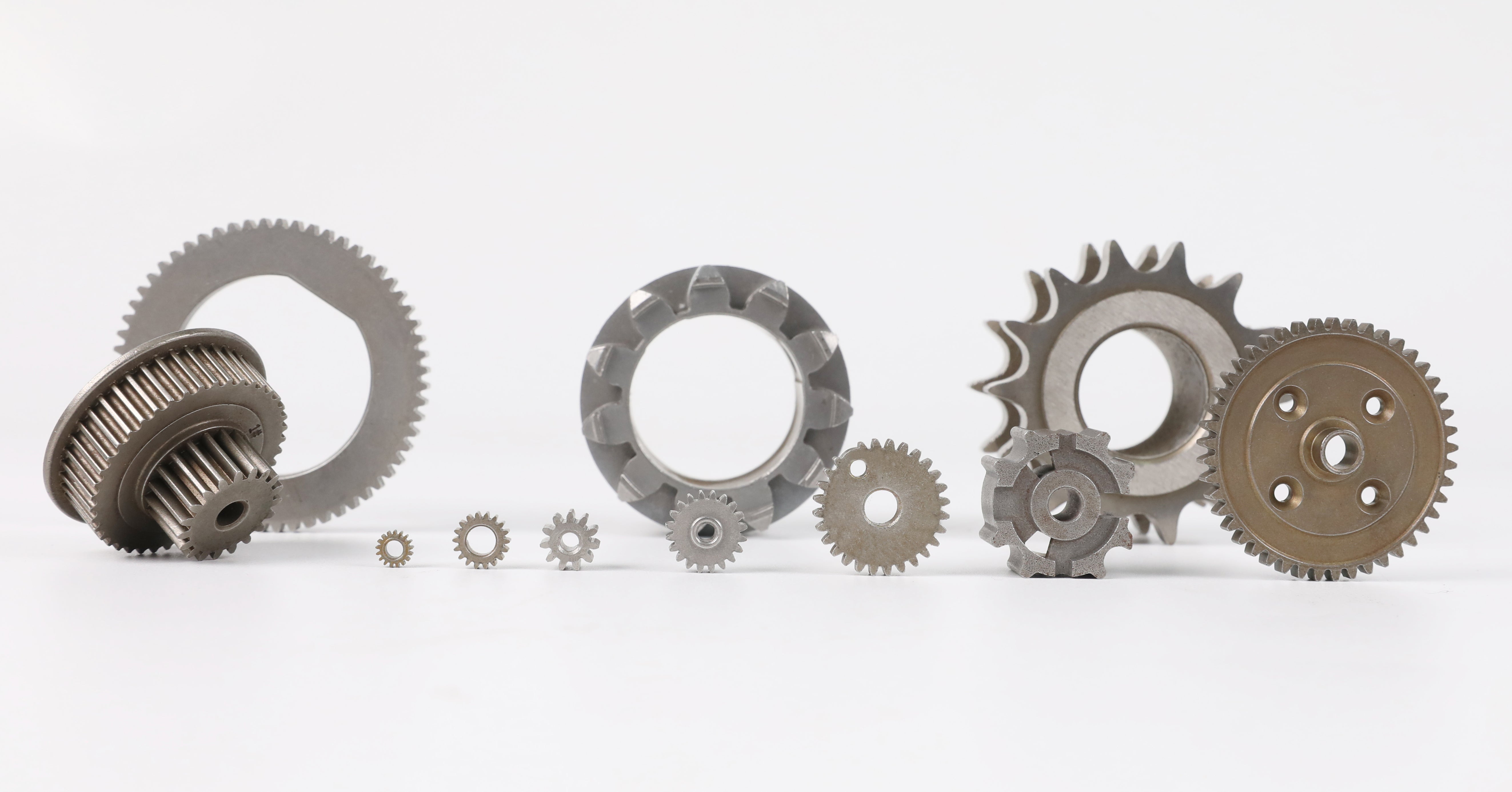
Infiltration powder metallurgy (IPs) are typically copper-based materials mixed or alloyed with other metals. Full body parts can be easily plated, welded or under-welded and can improve machinability.First, let me show you that the powder metallurgy process is a series of graphic steps :
- Mixing of powder and additives,
- Molding and sintering
- Post-processing
This process is clearly marked in the figure below.

Microporous Permeation Technology Overview
The core of Infiltration Powder Metallurgy and microporous penetration technology is to utilize the pore characteristics of powder metal products to store lubricants or other additives to optimize material performance. However, for some applications, pores may reduce the load-bearing capacity of the article, rendering it unsatisfactory for engineering needs. To solve this problem, engineers developed a method that uses low-melting point alloy infiltration technology to fill the pores, improving product density and performance.
Principle of Low Melting Point Alloy Penetration
The key to Infiltration Powder Metallurgy is the selection of low melting point alloys:
- Heat Treatment: Powdered metal retains its sintered shape and structure, while low melting point alloys melt and flow after heating.
- Capillary Action Penetration: The molten metal fills the pores of the powder metal through capillary action, significantly increasing the product density.
- Temperature and Time Control: The entire process requires strict management of heating temperature, metal fluidization time, and holding time to ensure the success of the infiltration process.
Penetrating Alloy Selection
In the infiltration application of iron-based alloys, copper is commonly used as a low melting point infiltration alloy:
-
Copper Penetration Effect:
- Increase the hardness and density of iron-based sintered parts;
- Improve corrosion resistance;
- Improve welding performance.
The results showed that the infiltrated iron-based parts turned brown due to densification, and the mechanical and chemical properties were significantly enhanced.
In addition to copper, ceramic slurries or other special materials can also be used to modify the porous metal matrix to meet different application needs in Infiltration Powder Metallurgy applications.

The Core Advantages of Penetration Technology
The Infiltration Powder Metallurgy process is an efficient secondary performance enhancement method that can significantly improve the comprehensive performance of powder metallurgy products, including but not limited to the following aspects:
- Increase Density and Hardness: Make the material structure tighter by filling the pore system, a key advantage of Infiltration Powder Metallurgy.
- Enhanced Corrosion Resistance: Low melting point metals used in infiltration can effectively prevent the intrusion of corrosive media.
- Improved Processability: Materials with sealed pores are easier to process and form, making machining and forming more reliable.
- Expanded Application Scope: Infiltration Powder Metallurgy enables originally porous metal materials to be suitable for more demanding mechanical or chemical environments.

Feature
Powder:
Typically > 93% copper content
Particle size - 100 mesh (<150 µm)
Typical apparent density 3.0 g/cm³
Pre-lubricated, ready-to-press powder with excellent green strength
Tailored for different grades to provide high efficiency, low adhesion and residue, and minimal erosion
Paste:
PM briquettes require no tools,
no pressing and handling of fragile PM briquettes,
easy automation,
reduced dust,
precise weight control,
improved control of part density
Summary of Microporous Penetration Technology
The development of Infiltration Powder Metallurgy opens broader possibilities for powder metal applications. By selecting suitable permeable materials and precisely controlling process parameters, this technology overcomes the negative effects of pores on material properties, significantly improving product quality, density, hardness, corrosion resistance, and service life.
At XY-Global, we specialize in precision structural parts and leverage advanced Infiltration Powder Metallurgy processes to deliver high-performance, reliable components. Our experience allows us to customize solutions for various industries, helping customers achieve more efficient and durable production outcomes.




Share:
CNC Processing Graphite Mold Technology: From Equipment Fixtures to Tools
The Metal Injection Molding (MIM) Process