

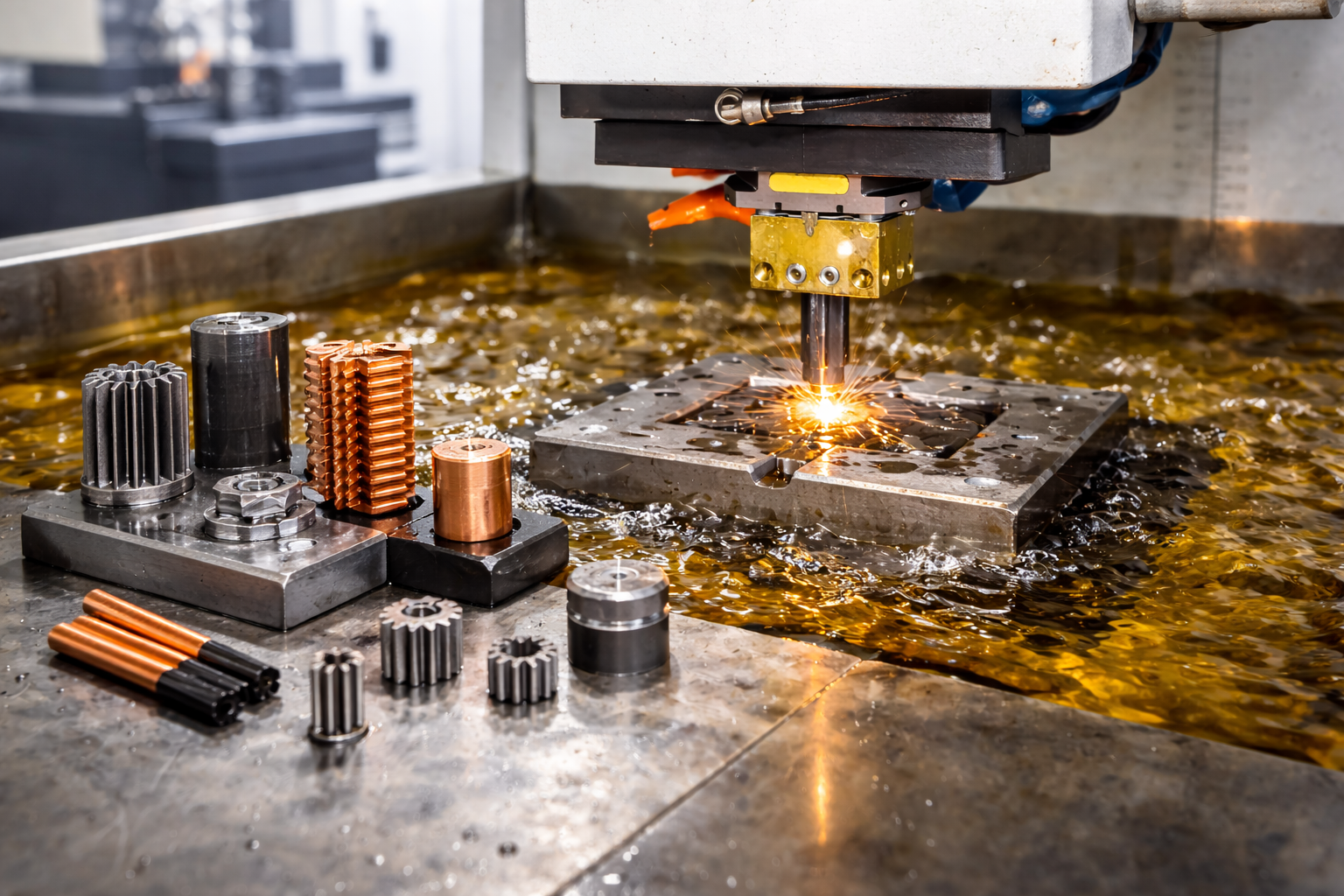
What is Electrical Discharge Machining (EDM)?
And How We Apply It to MIM Tooling & Precision Manufacturing
Electrical Discharge Machining (EDM) is a non-contact precision manufacturing process that removes material using controlled electrical sparks. Unlike traditional cutting methods, electrical discharge machining does not rely on mechanical force. Instead, it uses high-frequency pulse discharge between an electrode and a conductive workpiece submerged in dielectric fluid.
Each spark generates localized temperatures of up to 8,000–12,000°C, instantly melting and vaporizing micro volumes of material. By precisely controlling pulse duration and discharge gap (typically 5–50 μm), complex geometries can be formed with micron-level accuracy.
EDM is especially critical in applications where:
-
Geometry is too complex for conventional CNC machining
-
Material hardness exceeds HRC 50
-
Micro-features below 0.2 mm are required
-
Surface integrity is more important than machining speed
How We Use EDM in MIM Tooling & Precision Mold Manufacturing

For Metal Injection Molding (MIM), the mold is everything.
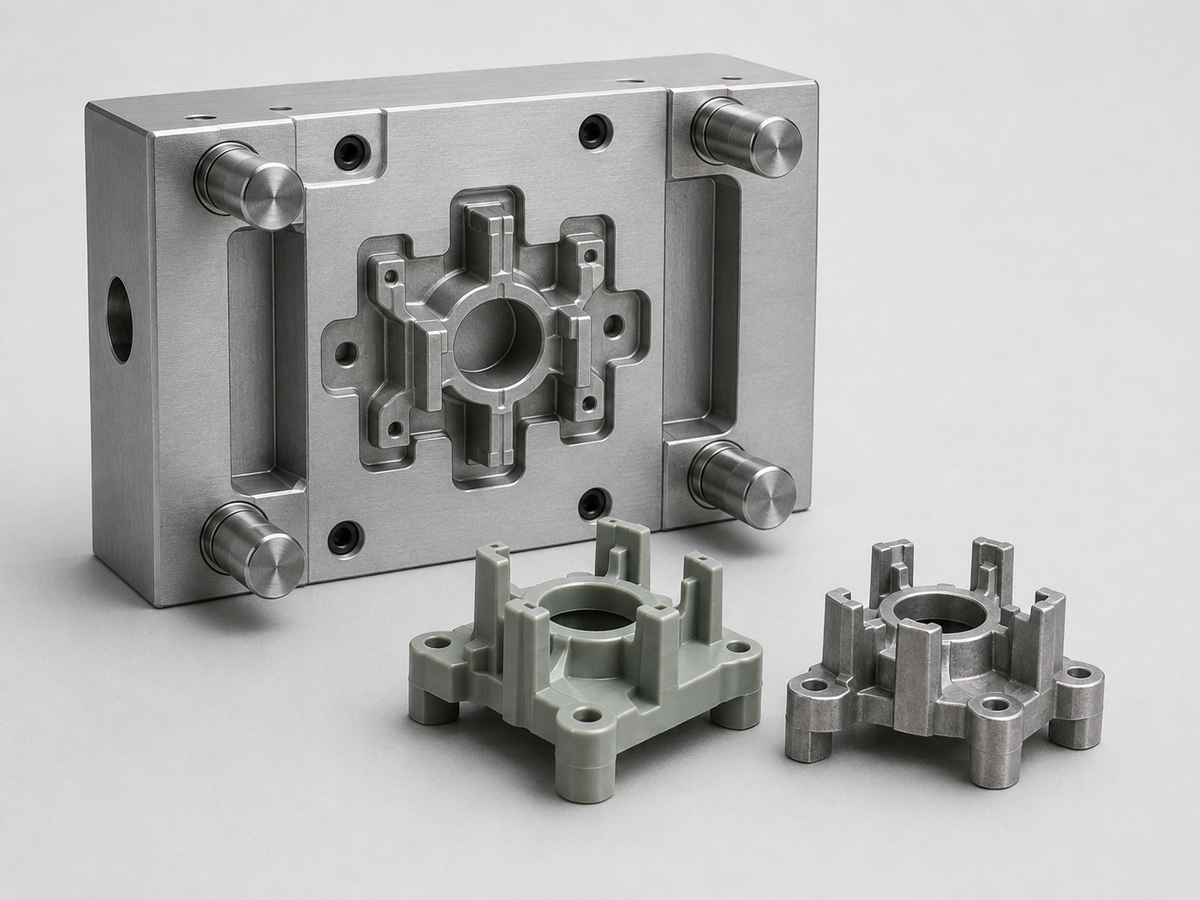
Micro cavities, thin ribs, undercuts, and complex 3D structures in MIM parts require mold inserts that cannot be produced using conventional milling alone. This is where electrical discharge machining becomes essential.
Typical MIM Tooling Challenges We Solve
| Challenge | Our EDM Capability |
|---|---|
| Micro slots below 0.15 mm | Wire EDM cutting down to 0.1 mm |
| High hardness mold steel (HRC 58–62) | Stable discharge machining without tool wear |
| Deep narrow cavities | Aspect ratio up to 15:1 |
| Surface finish requirement | Ra 0.2–0.4 μm (after polishing) |
| Dimensional tolerance | ±0.005 mm |

Real Case Example: Micro Gear Mold Insert for MIM
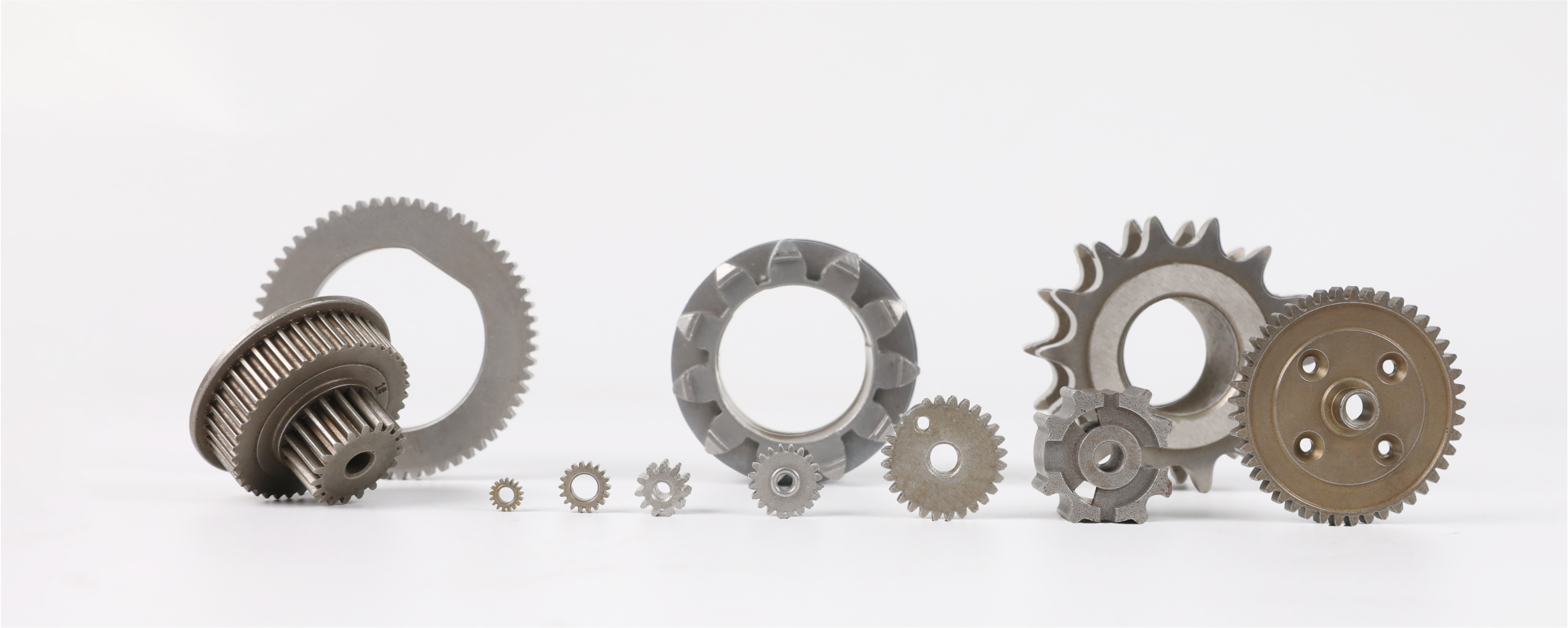
Project: Stainless steel MIM micro gear
Module: 0.3
Number of teeth: 42
Tooth thickness: 0.18 mm
Challenge:
The gear cavity required sharp internal corners and micro tooth geometry impossible to mill.
Solution:
-
Rough cavity machining via CNC
-
Precision shaping via sinker EDM
-
Micro-detail finishing using wire EDM
-
Surface polishing to achieve Ra 0.3 μm
Verification Process:
-
CMM dimensional inspection
→ Profile accuracy within ±0.004 mm -
Optical microscope inspection
→ Confirmed sharp edge definition without over-burn -
Trial MIM injection
→ Part shrinkage compensated at mold stage -
Sintered part inspection
→ Final gear concentricity within 0.01 mm
This closed-loop verification confirms that EDM precision directly translates into stable MIM mass production.
Our EDM Capabilities
We operate:
-
CNC Sinker EDM machines (3-axis & 5-axis)
-
High-speed Wire EDM (cutting speed up to 300 mm²/min)
-
Micro-EDM for electrode diameters down to 0.1 mm
Machine Accuracy:
-
Positioning accuracy: ±0.002 mm
-
Repeatability: ±0.003 mm
-
Minimum wire diameter: 0.1 mm
Electrode Materials Used:
-
Graphite (fine grain ≤5 μm)
-
Copper
-
Copper-tungsten
We design electrodes in-house using CAD/CAM and simulate spark erosion allowance before machining.

Why Electrical Discharge Machining Matters in MIM Production
In MIM manufacturing, dimensional control does not end at machining.
You must consider:
-
Injection shrinkage (typically 15–20%)
-
Sintering distortion
-
Binder removal shrinkage
Our engineering team integrates:
-
Moldflow simulation
-
Shrinkage compensation modeling
-
EDM overcut calculation
-
Trial sampling validation
This ensures the final sintered MIM part meets tolerance requirements, not just the mold cavity.

Beyond Tooling: EDM for High-Precision Metal Components
Besides MIM molds, we also use electrical discharge machining for:
-
Hard stainless steel components
-
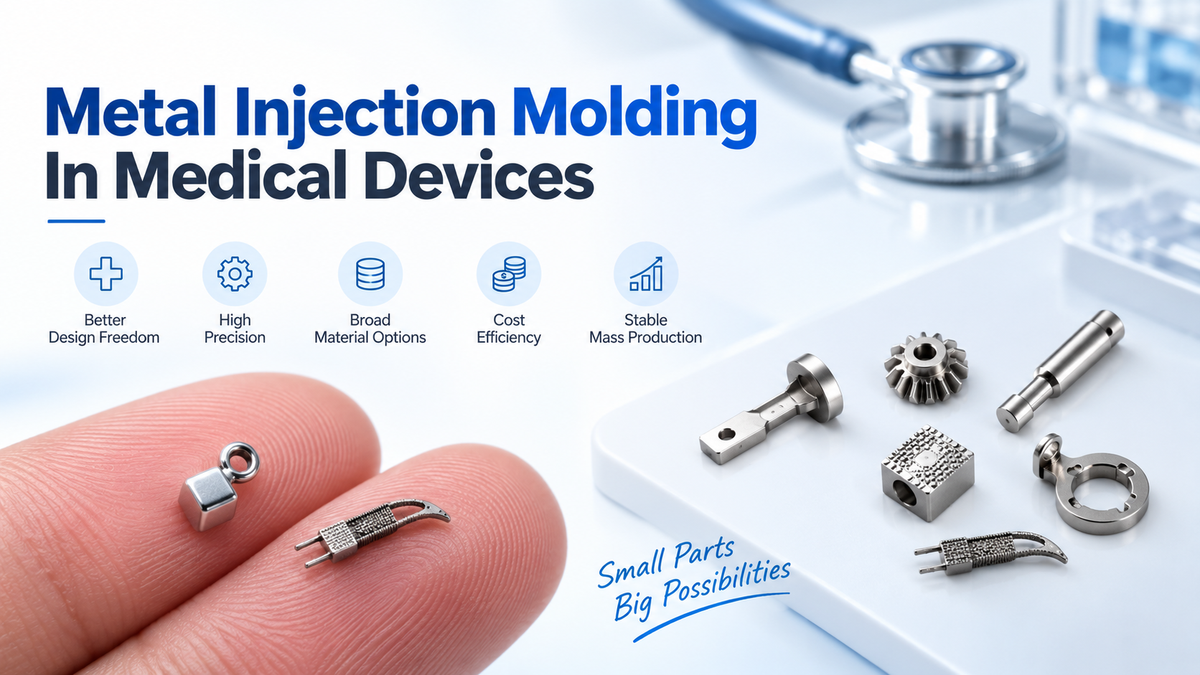
Medical device micro structures
-
Aerospace precision slots
-
Micro heat sinks
-
Connector pins with sharp edges
EDM allows us to machine materials such as:
-
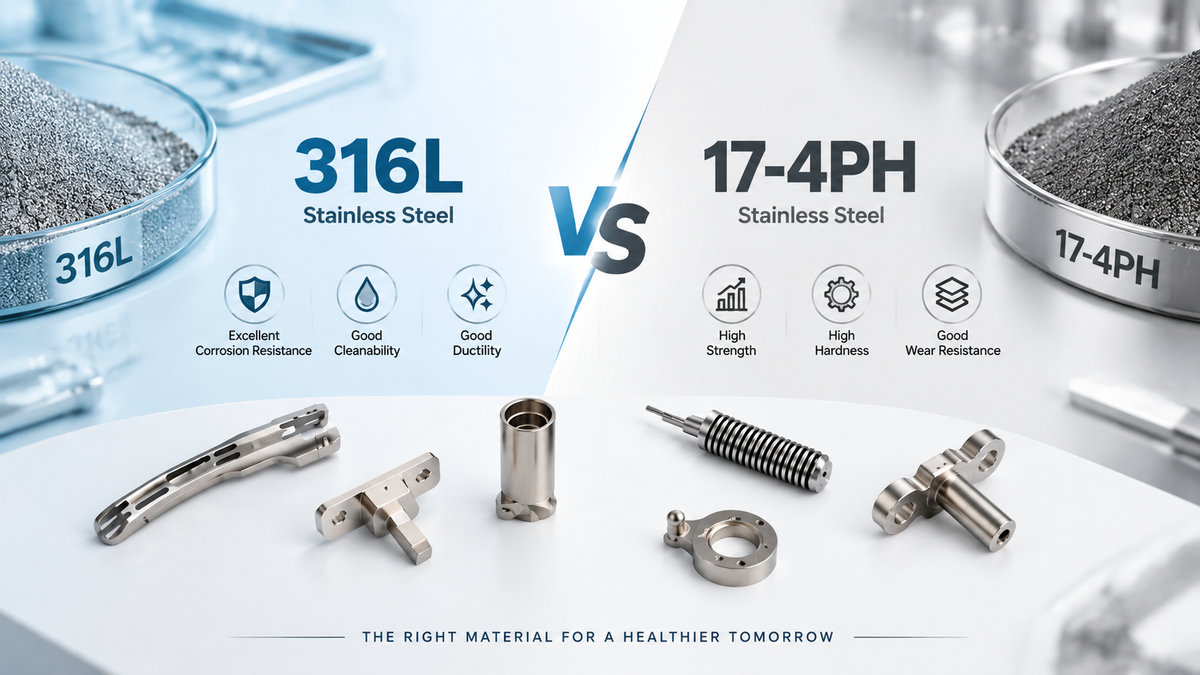
SUS420 / SUS440C
-
H13 tool steel
-
Tungsten carbide
-
Copper alloys
The Future of Electrical Discharge Machining in Micro Manufacturing
As MIM evolves toward:
-
Smaller modules
-
Thinner walls (<0.3 mm)
-
Higher density materials
-
Medical-grade precision
EDM becomes increasingly critical.
We are currently developing:
-
Multi-axis EDM linkage for complex spatial cavities
-
Micro-feature machining below 80 μm
-
Surface integrity control to reduce recast layer thickness

Conclusion
Electrical discharge machining is not just a machining method — it is an enabling technology for high-precision MIM tooling and advanced metal manufacturing.
By combining:
-
EDM precision
-
Mold design expertise
-
Shrinkage compensation engineering
-
Full-process validation
We ensure that our MIM components achieve both geometric accuracy and stable mass production performance.
If you are developing complex micro metal components or precision molds, our engineering team can support you from mold design to validated production.
Share:
Macor Ceramic Machining: Precision Capabilities, Cost Factors, and How to Choose the Right Supplier
Machining Small Parts: From Rapid Prototyping to Scalable Medical Production