

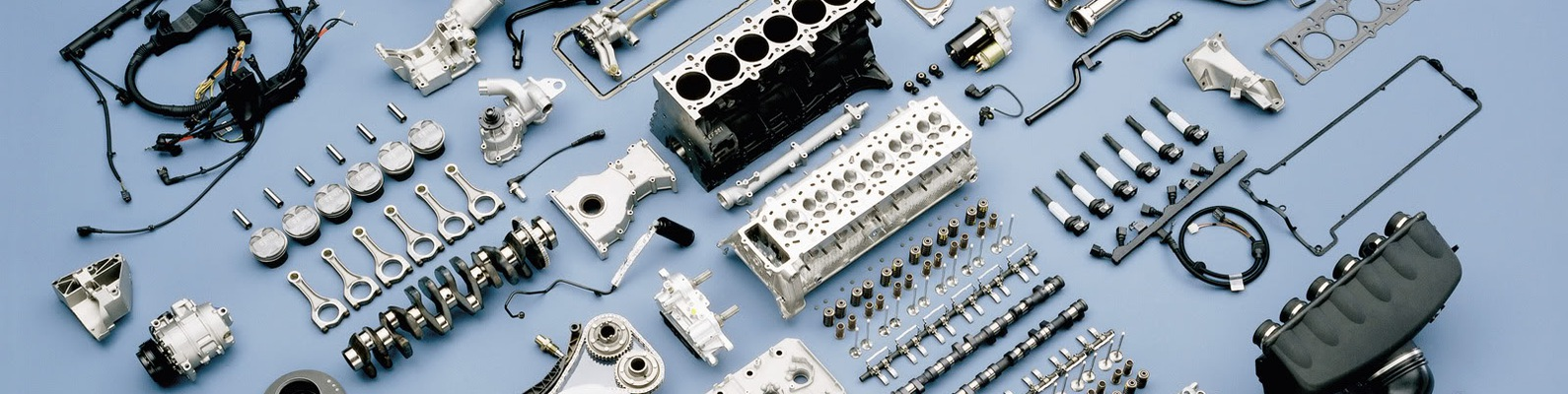
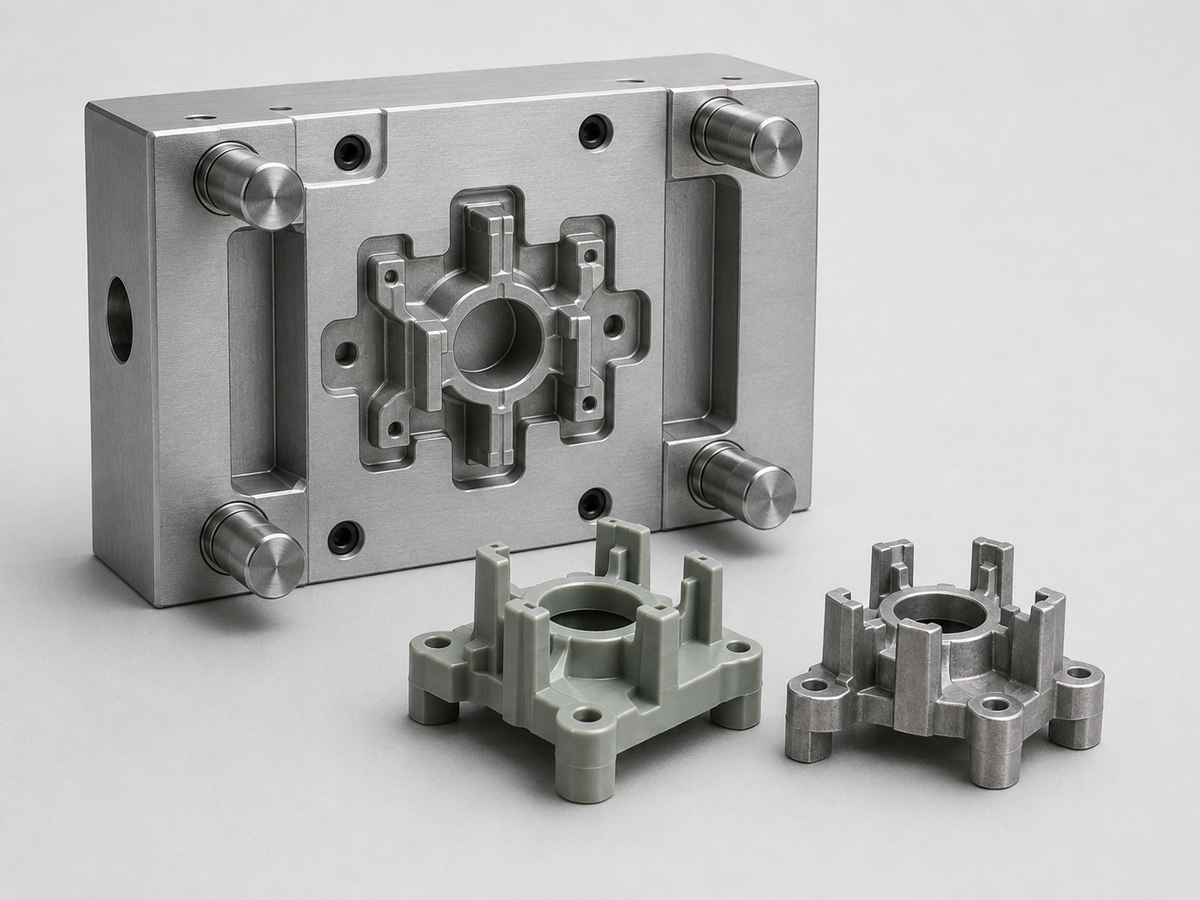
Lo stampo per la MIM influisce notevolmente sulle capacità dimensionali del prodotto durante la produzione. Una volta espulso il componente dallo stampo, resta poca possibilità di correggerne le dimensioni senza costi aggiuntivi. Gli stampi MIM sono simili a quelli utilizzati nello stampaggio a iniezione delle materie plastiche, sebbene siano sovradimensionati per tenere conto dell'elevato ritiro durante la sinterizzazione. Nella maggior parte dei casi, il gruppo stampo è costituito da una a quattro cavità, servite da elementi che si muovono in coordinamento con le fasi di apertura, stampaggio e chiusura, come gli estrattori laterali e i perni di espulsione.
La progettazione del componente, dello stampo e del processo è molto importante. Nella MIM occorre considerare anche la maggiore conducibilità termica e densità del materiale di alimentazione. Le particelle metalliche rendono il legante molto più termicamente conduttivo rispetto alle materie plastiche. Allo stesso modo, le particelle metalliche aumentano notevolmente la densità del materiale di alimentazione rispetto alle plastiche comuni. Per il resto, la MIM si basa su principi simili a quelli dello stampaggio a iniezione delle materie plastiche.

Imperfezioni degli utensili
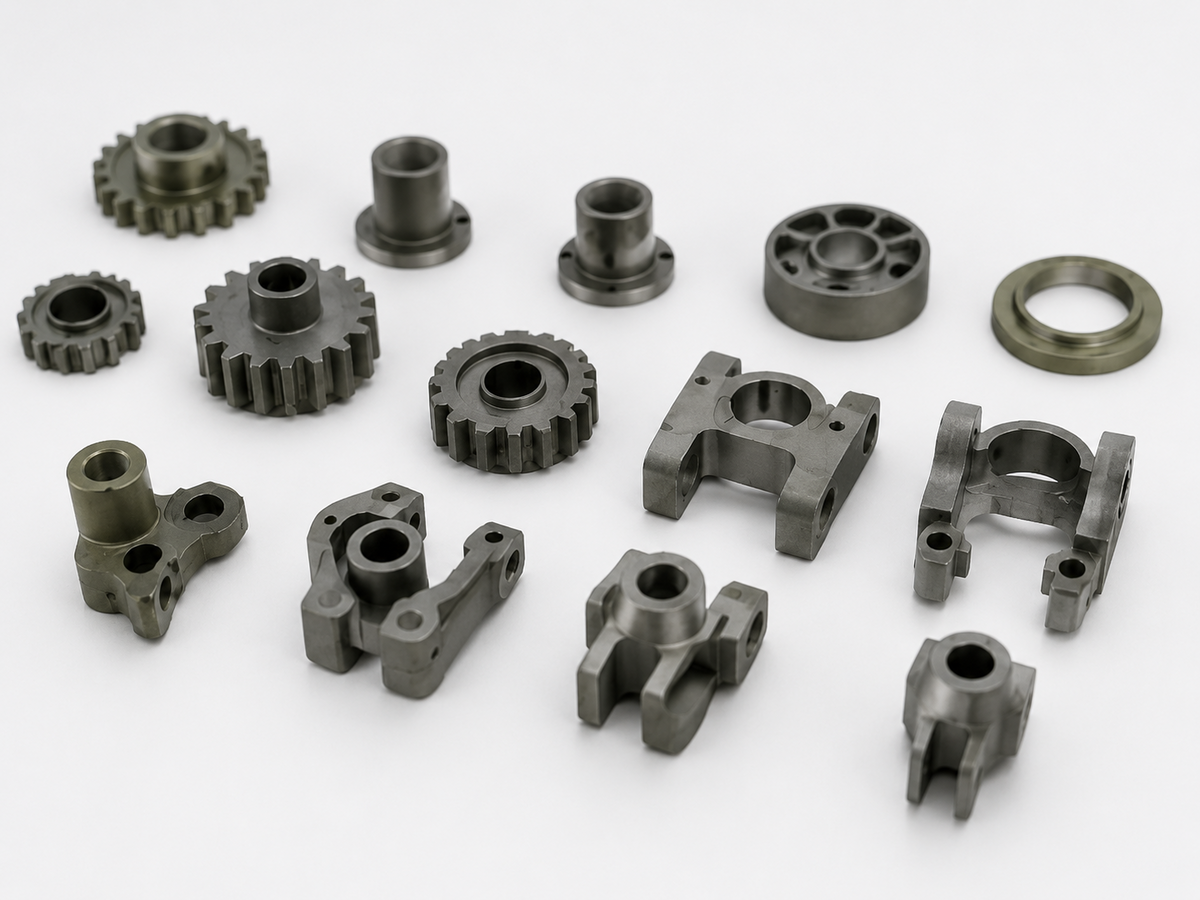
Una progettazione efficace di un componente MIM consente di posizionare la linea di divisione, i segni dei perni di espulsione, le linee di riscontro e il punto di iniezione in aree non critiche. Spesso il punto di iniezione si trova su una linea di divisione, quindi queste due imperfezioni sono strettamente correlate. Le linee di divisione possono essere collocate lungo i bordi del componente per ridurne la visibilità. Talvolta, nel gruppo stampo vengono inseriti elementi che consentono modifiche, sostituzioni, intercambiabilità e manutenzione. Questi componenti inseriti lasciano linee di riscontro nei punti in cui si raccordano con la superficie del componente principale.
Nelle prime fasi del processo di progettazione, il progettista deve considerare il posizionamento di queste imperfezioni in aree in cui non compromettano la funzionalità o l'estetica. In alternativa, il punto di iniezione può essere rimosso mediante molatura o lucidatura dopo lo stampaggio, ma prima della rimozione del legante e della sinterizzazione, poiché in questa fase il materiale è facilmente asportabile.
Condividi:
Taglio a getto d'acqua abrasivo o ad acqua pura: quale è migliore?
Stampaggio a iniezione dei metalli, materiali e proprietà