

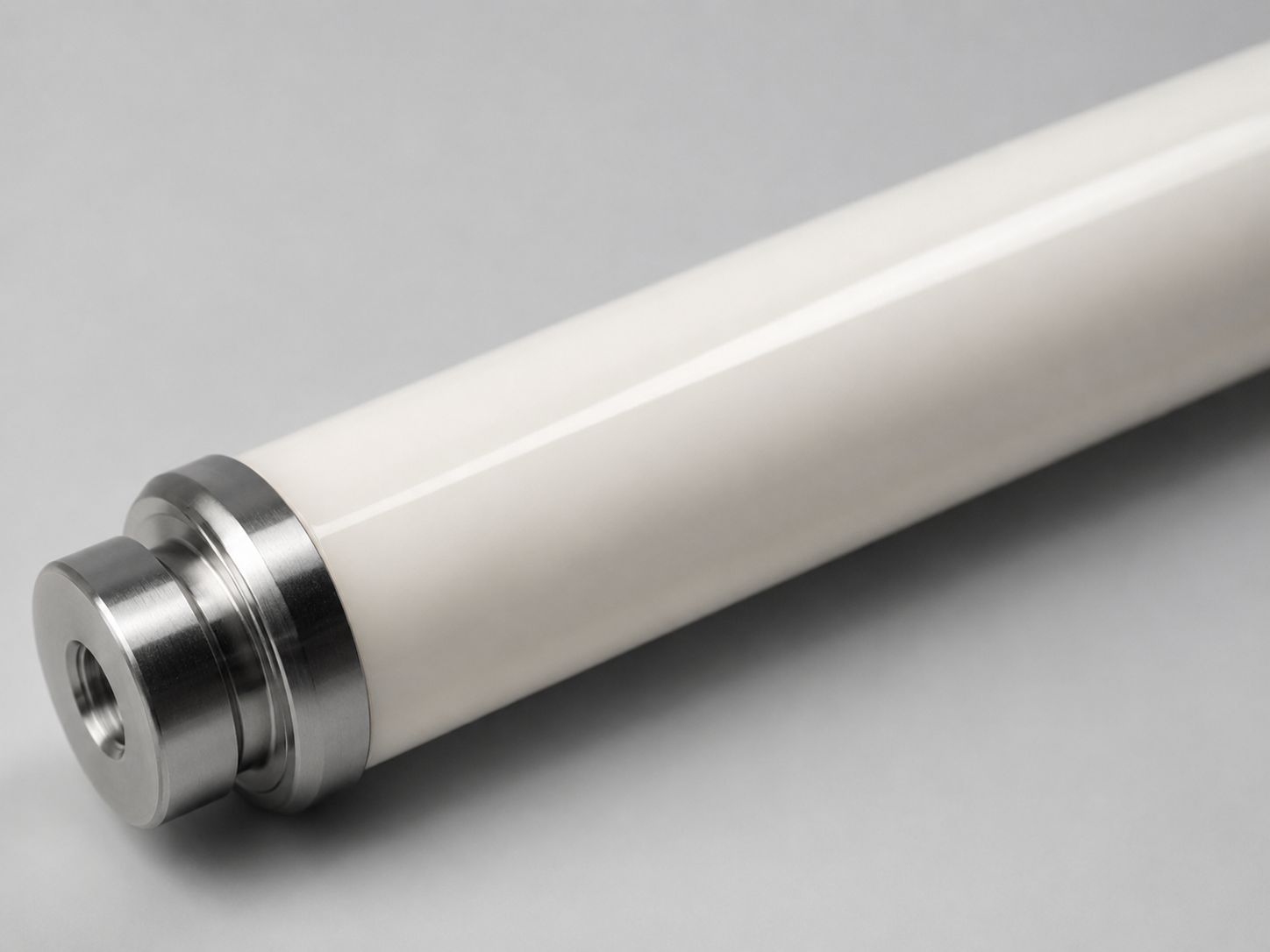
Las bombas dosificadoras, las bombas de llenado y los sistemas de dispensación de precisión pueden desarrollar gradualmente fugas, flujo inestable, desgaste del émbolo, menor vida útil de los sellos o agarrotamiento después de un funcionamiento prolongado.
En muchos casos, el problema no proviene del motor o del sistema de accionamiento. Proviene de la interfaz de trabajo entre el émbolo y el casquillo.
El movimiento alternativo repetido puede cambiar gradualmente la superficie y las dimensiones de los componentes metálicos convencionales. Los productos químicos corrosivos, el electrolito de batería, los fluidos abrasivos y la operación continua pueden acelerar este proceso.
Las señales típicas incluyen:
-
arañazos o marcas de desgaste en el émbolo
-
corrosión y picaduras en la superficie
-
aumento de la holgura entre el émbolo y el casquillo
-
desgaste del orificio del casquillo
-
volumen de dosificación inestable
-
reemplazo frecuente de sellos
-
resistencia al funcionamiento desigual
-
agarrotamiento del émbolo
Un conjunto de émbolo y casquillo cerámico puede ayudar a solucionar estos problemas, ya que las cerámicas técnicas proporcionan una excelente resistencia al desgaste, resistencia a la corrosión y estabilidad dimensional.
Sin embargo, cambiar el material de metal a cerámica es solo una parte de la solución.
El rendimiento confiable depende de cuatro factores:
Material cerámico + Precisión del émbolo + Precisión del orificio del casquillo + Holgura de trabajo final
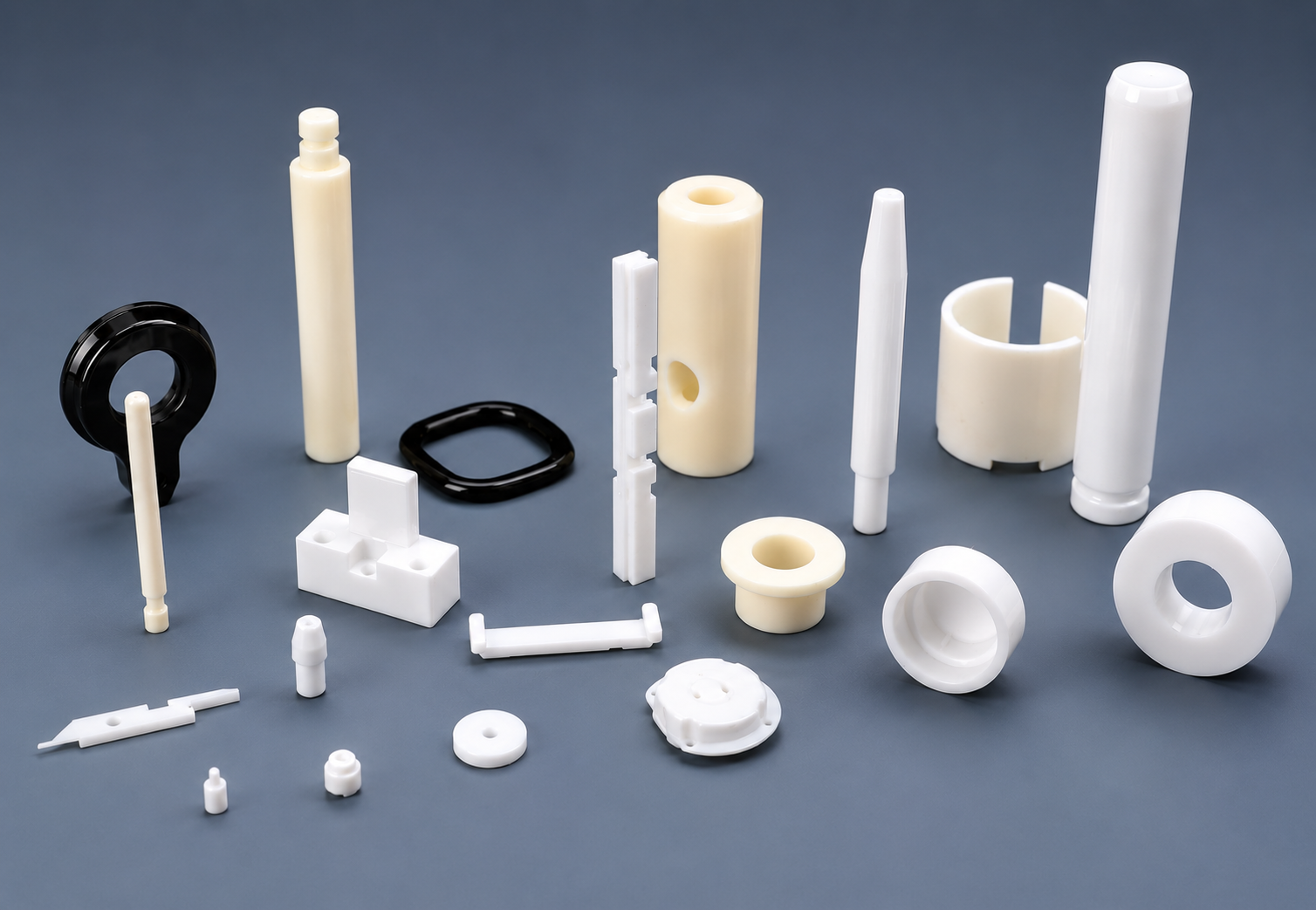
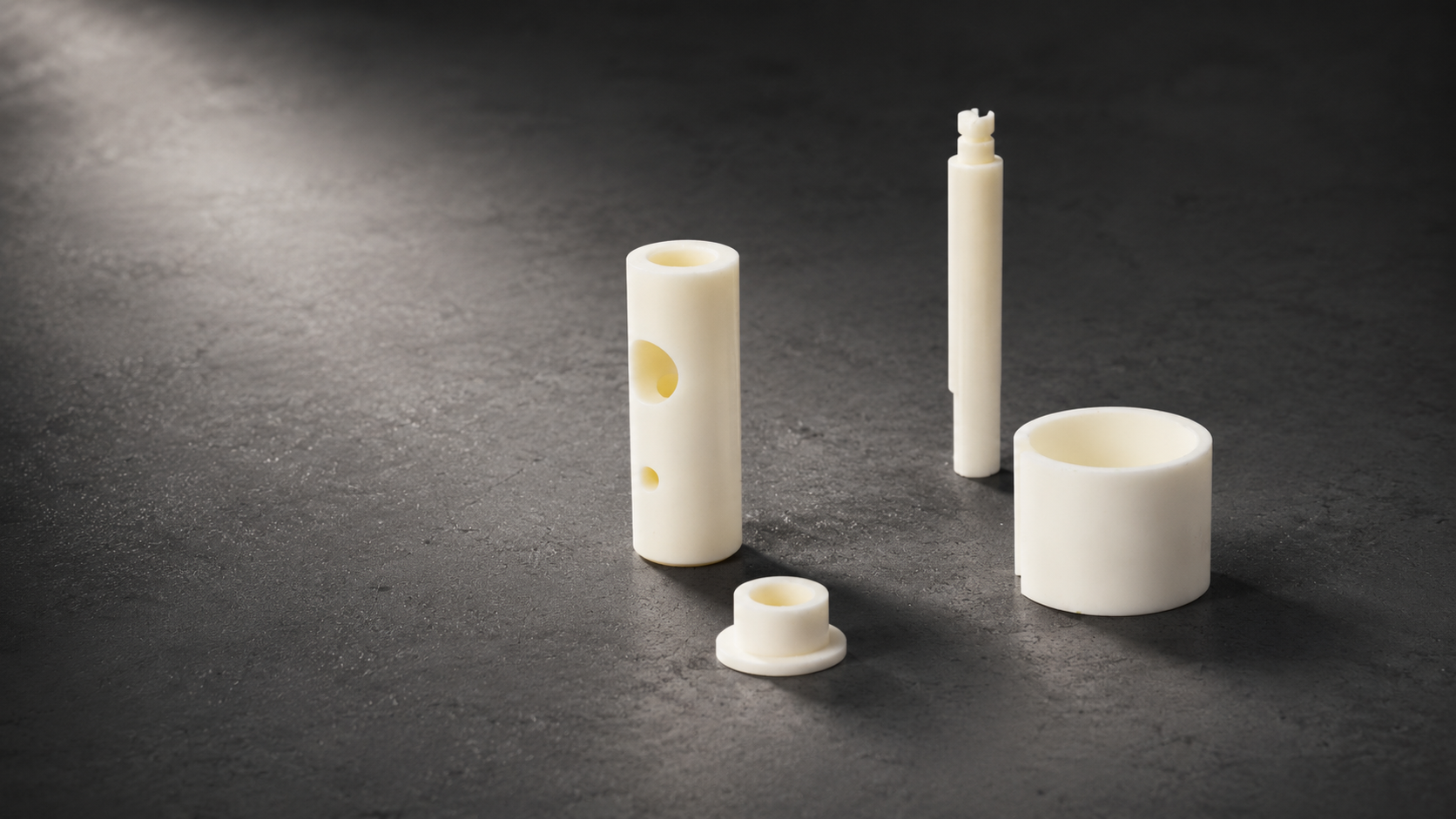
XY-GLOBAL fabrica émbolos cerámicos, casquillos cerámicos y conjuntos de émbolo y casquillo cerámicos a medida personalizados según planos, modelos 3D, muestras existentes y condiciones operativas reales.

¿Por qué las bombas dosificadoras tienen fugas o pierden precisión de flujo con el tiempo?
Si una bomba dosificadora funciona con precisión cuando es nueva pero pierde repetibilidad gradualmente, se deben revisar el émbolo y el casquillo juntos.
El desgaste del émbolo cambia la condición de sellado
Un émbolo puede completar millones de ciclos alternativos durante su vida útil.
Con el tiempo, pueden aparecer pequeños arañazos, bandas de desgaste o cambios dimensionales en la superficie de trabajo. Estos cambios pueden alterar la condición de sellado entre el émbolo, el casquillo y el sello.
Para la transferencia de fluidos en general, una pequeña cantidad de desgaste puede no afectar el rendimiento de inmediato.
Sin embargo, para las bombas de microdosificación, llenado de precisión y dispensación, incluso un pequeño cambio dimensional puede afectar el volumen de desplazamiento y la repetibilidad de la dosificación.
La corrosión puede acelerar el desgaste de los sellos
El acero inoxidable ofrece una buena resistencia a la corrosión, pero no es resistente a todos los entornos químicos.
Los ácidos, los álcalis, los electrolitos de batería y ciertos productos químicos de proceso pueden causar el deterioro de la superficie o picaduras bajo condiciones específicas.
Una vez que la superficie del émbolo se vuelve rugosa, el desgaste del sello puede acelerarse.
El resultado puede ser:
-
aumento de las fugas
-
menor vida útil del sello
-
mantenimiento más frecuente
-
pérdida gradual de la precisión de dosificación
El uso de un material cerámico seleccionado adecuadamente puede reducir este tipo de degradación superficial.
El desgaste del orificio del casquillo puede cambiar el movimiento del émbolo
El casquillo es tan importante como el émbolo.
Si el orificio del casquillo se desgasta, se vuelve cónico o pierde su redondez, es posible que el émbolo ya no se mueva de forma concéntrica.
Los síntomas posibles incluyen:
-
desgaste desigual del émbolo
-
cambio en la resistencia al funcionamiento
-
vibración
-
agarrotamiento local
-
flujo inconsistente
Por lo tanto, reemplazar solo el émbolo puede no resolver el problema si el orificio del casquillo ya ha perdido su geometría original.
¿Por qué usar un émbolo cerámico en lugar de uno de acero inoxidable?
El beneficio principal de un émbolo cerámico no es simplemente una mayor dureza.
La cerámica se vuelve valiosa cuando el componente metálico existente falla debido al desgaste, la corrosión o la degradación superficial a largo plazo.
| Problema operativo | Riesgo del émbolo metálico | Ventaja del émbolo cerámico |
|---|---|---|
| Movimiento alternativo de alto ciclo | Desgaste y rayado | Superficie de trabajo de alta dureza |
| Fluidos corrosivos | Picaduras y degradación superficial | La cerámica puede seleccionarse por su compatibilidad química |
| Dosificación de precisión | Cambios de diámetro tras el desgaste | Geometría de trabajo rectificada con precisión |
| Falla frecuente del sello | Las superficies rugosas aceleran el desgaste del sello | El rectificado y pulido fino mejoran la superficie de trabajo |
| Operación continua | El ajuste cambia gradualmente | La alta resistencia al desgaste ayuda a mantener la estabilidad dimensional |
| Contacto con fluidos sensibles | Superficie metálica expuesta | La cerámica reduce el metal expuesto en áreas de trabajo críticas |
Las características críticas del émbolo cerámico normalmente incluyen:
-
diámetro de trabajo
-
redondez
-
cilindricidad
-
rectitud
-
rugosidad superficial
-
concentricidad
-
dimensiones del área de sellado
Dependiendo de la geometría de la pieza, las dimensiones críticas se pueden evaluar hasta aproximadamente ±0.005 mm.
Las superficies críticas de deslizamiento y sellado también se pueden rectificar, lapear o pulir con precisión.

¿Puede un émbolo cerámico causar el agarrotamiento de la bomba?
La cerámica por sí misma no suele ser la razón por la que una bomba se agarrota.
El agarrotamiento es causado más comúnmente por:
-
holgura insuficiente entre el émbolo y el casquillo
-
poca redondez del orificio del casquillo
-
conicidad del orificio
-
desalineación del émbolo y el casquillo
-
excentricidad del conjunto
-
partículas o cristalización en el fluido
-
cambios térmicos en el ajuste de trabajo.
Por ejemplo, un émbolo cerámico puede cumplir perfectamente con su tolerancia de diámetro exterior (OD).
Sin embargo, si una sección del orificio del casquillo cerámico es localmente más pequeña, la resistencia al funcionamiento puede aumentar repentinamente cuando el émbolo alcanza esa posición.
Esto significa que comprobar solo:
“¿Está el OD del émbolo dentro de la tolerancia?”
no es suficiente.
La pregunta más importante es:
“¿Mantiene el conjunto la holgura requerida a lo largo de toda la carrera de trabajo?”
¿Por qué es tan importante la precisión del orificio del casquillo cerámico?
Un casquillo cerámico puede parecer un componente cilíndrico simple, pero el orificio suele ser la superficie funcional más importante.
Su geometría influye directamente en el movimiento, las fugas y el desgaste.
| Característica del casquillo cerámico | Posible problema si está mal controlado |
|---|---|
| Diámetro del orificio | Fugas excesivas o resistencia excesiva al funcionamiento |
| Redondez | Contacto local, desgaste desigual o agarrotamiento |
| Cilindricidad | Cambios de holgura a lo largo de la carrera |
| Rectitud | El movimiento del émbolo se descentra |
| Concentricidad ID/OD | Desalineación después de la instalación |
| Rugosidad superficial | Aumento de la fricción y desgaste del sello |
| Perpendicularidad de la cara extrema | Inclinación del conjunto o precarga no deseada |
Es por eso que la fabricación de precisión de casquillos cerámicos requiere algo más que el conformado y sinterizado de la cerámica.
El rendimiento final suele depender de:
Rectificado interno + Lapeado + Pulido + Inspección de precisión
Los orificios largos, los orificios pequeños y los casquillos de pared delgada requieren un control adicional porque son más sensibles a la deformación del procesamiento y a las condiciones de medición.

¿Por qué los émbolos y casquillos cerámicos deben fabricarse como piezas emparejadas?
Un error común es evaluar el émbolo cerámico y el casquillo cerámico como dos componentes independientes.
Considere esta situación:
El OD del émbolo está dentro de la tolerancia del plano.
El ID del casquillo también está dentro de la tolerancia del plano.
Ambas piezas pasan la inspección.
Pero una vez ensambladas, su ajuste real aún puede variar.
Esto se debe a que la verdadera condición de funcionamiento depende de:
ID real del casquillo − OD real del émbolo = Holgura de trabajo real
Para los sistemas de control de fluidos de precisión, la holgura de trabajo final suele ser más importante que la tolerancia de cualquier pieza individual.
| Elemento | Fabricación por separado | Fabricación emparejada |
|---|---|---|
| OD del émbolo | Inspeccionado de forma independiente | Comprobado frente al ID real del casquillo |
| ID del casquillo | Inspeccionado de forma independiente | Comprobado frente al OD real del émbolo |
| Holgura de trabajo | Determinado por la acumulación de tolerancias | Gestionado como una dimensión funcional |
| Consistencia del lote | Diferentes combinaciones pueden producir diferentes ajustes | Los componentes se pueden emparejar por tamaño medido |
| Riesgo de agarrotamiento | Más dependiente de combinaciones aleatorias | Más fácil de identificar antes del envío |
| Consistencia de fugas | Puede variar entre conjuntos | Control de holgura más consistente |
La fabricación emparejada es especialmente útil para:
-
bombas dosificadoras de precisión
-
bombas de microllenado
-
equipos de llenado de electrolito de batería
-
bombas dosificadoras de productos químicos
-
sistemas de dispensación de alta precisión
Para estos proyectos, lo mejor es proporcionar:
Plano del émbolo + Plano del casquillo + Plano del conjunto
Esto permite evaluar toda la cadena dimensional en lugar de verificar dos componentes por separado.
Si la holgura de trabajo final aún no se ha confirmado, XY-GLOBAL puede revisar el plano del conjunto, el medio de operación y los requisitos funcionales antes de la producción.

¿Qué holgura deben tener un émbolo y un casquillo cerámicos?
No existe una holgura universal para el conjunto de émbolo y casquillo cerámicos que funcione para todas las bombas.
La holgura correcta depende de:
-
diámetro del émbolo
-
longitud del émbolo
-
presión operativa
-
viscosidad del fluido
-
velocidad alternativa
-
temperatura operativa
-
método de sellado
-
material cerámico
-
alineación del equipo
-
partículas o cristalización en el medio.
Para los sistemas de dosificación de precisión, las diferencias dimensionales de solo unas pocas micras pueden influir en las fugas y la resistencia al funcionamiento.
Por esto, copiar un valor de holgura de otro diseño de bomba puede ser arriesgado.
Para un producto nuevo, la holgura debe revisarse junto con el plano completo del conjunto y las condiciones operativas.
Para un sistema existente, las mediciones de muestras de trabajo probadas también pueden proporcionar datos de referencia útiles.
Si no está seguro sobre la holgura necesaria entre el émbolo y el casquillo, envíenos el plano del conjunto y las condiciones de trabajo. Podemos evaluar la acumulación de tolerancias y la viabilidad de la fabricación cerámica antes de la producción.

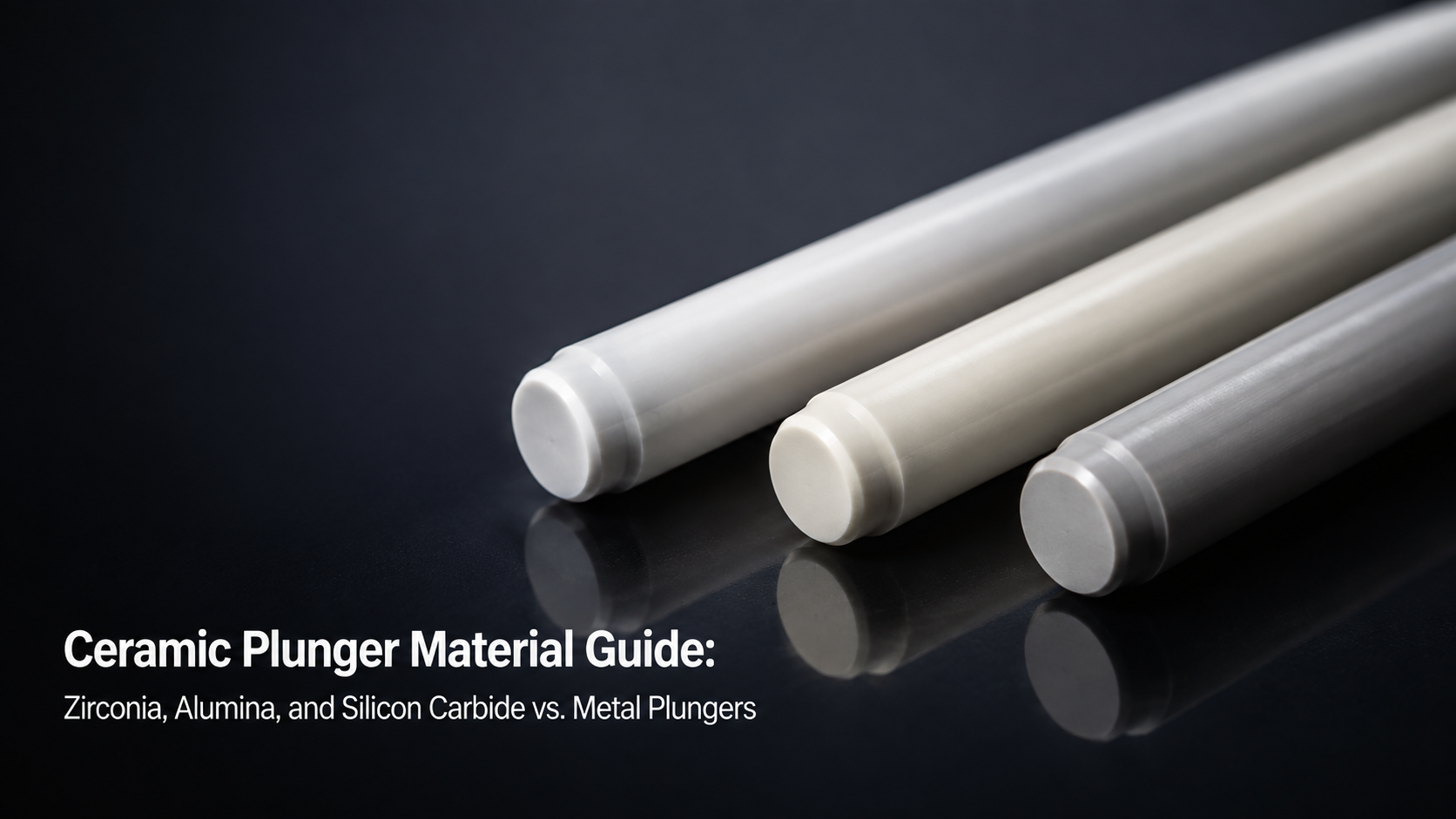
Émbolo cerámico de alúmina frente a zirconia: ¿Qué material debería elegir?
La cerámica con las especificaciones más altas no siempre es el mejor material para la aplicación.
Un proceso de selección más práctico es:
Fluido → Desgaste → Carga mecánica → Geometría → Precisión → Coste
¿Cuándo debería elegir alúmina?
La alúmina es una de las cerámicas técnicas más utilizadas.
Se utiliza comúnmente para:
-
bombas dosificadoras de productos químicos
-
sistemas de llenado de líquidos
-
casquillos cerámicos
-
componentes alternativos continuos
-
producción sensible a los costes
-
aplicaciones de bajo impacto
Sus principales ventajas incluyen:
-
alta dureza
-
buena resistencia al desgaste
-
buena resistencia química en muchos entornos
-
procesos de fabricación maduros
-
coste relativamente competitivo.
La limitación principal es la tenacidad a la fractura.
En comparación con la zirconia, la alúmina es menos adecuada para componentes expuestos a impactos significativos, cargas laterales o secciones delgadas altamente tensionadas.
¿Cuándo es más adecuada la zirconia?
A menudo se considera la zirconia para:
-
émbolos de precisión de pequeño diámetro
-
microdosificación
-
dispensación de precisión
-
geometrías de émbolo más complejas
-
aplicaciones que requieren una mayor tenacidad a la fractura.
Su mayor tenacidad puede hacerla más adecuada para componentes mecánicamente exigentes.
Sin embargo, la zirconia no debe reemplazar automáticamente a la alúmina.
Si la alúmina ya cumple con los requisitos de desgaste, corrosión y mecánicos, el uso de zirconia puede aumentar el coste sin proporcionar una ventaja significativa.
¿Cuándo se debería considerar SiC o Si₃N₄?
El carburo de silicio (SiC) y el nitruro de silicio (Si₃N₄) son más adecuados para condiciones operativas exigentes.
El SiC se suele considerar para:
-
fluidos altamente abrasivos
-
condiciones de desgaste severo
-
entornos químicos exigentes.
El Si₃N₄ puede considerarse donde:
-
resistencia al desgaste
resistencia mecánica
fiabilidad dinámica
sean todos importantes.
Ambos materiales generalmente implican costes de fabricación más altos que la alúmina estándar.
Deben seleccionarse porque la condición operativa los requiere, no simplemente porque los valores de su ficha técnica sean más altos.
Guía de selección de material para émbolos cerámicos
| Aplicación | Dirección de material recomendada | Razón principal |
|---|---|---|
| Bomba dosificadora de productos químicos estándar | Alúmina | Equilibrio de desgaste, corrosión y coste |
| Microdosificación de precisión | Zirconia / Alúmina de precisión | Precisión y movimiento estable |
| Émbolo de precisión de pequeño diámetro | Zirconia | Mayor tenacidad a la fractura |
| Casquillo cerámico estándar | Alúmina | Resistencia al desgaste rentable |
| Fluido altamente abrasivo | SiC / Si₃N₄ | Condiciones de desgaste más exigentes |
| Carga lateral o riesgo de impacto | Circonia / Si₃N₄ | Mayor fiabilidad mecánica |
| Producción en volumen sensible a los costes | Alúmina | Ruta de fabricación más económica |
La selección final del material también debe considerar la concentración del fluido, la temperatura, la presión y la carga mecánica.
Si no está seguro de si usar alúmina, circonia, carburo de silicio o nitruro de silicio, proporcione el medio de trabajo y el plano para una revisión de ingeniería.
Émbolo de cerámica frente a émbolo de acero inoxidable: ¿Cuándo merece la pena el coste de la cerámica?
No todas las bombas necesitan un émbolo de cerámica.
Si el componente actual de acero inoxidable ya proporciona una vida útil aceptable y el fluido no es particularmente agresivo, el metal puede seguir siendo la solución más económica.
La cerámica se vuelve más relevante cuando el componente existente sufre repetidamente de:
-
desgaste rápido de la superficie
-
corrosión o picaduras
-
reemplazo frecuente de sellos
-
desviación creciente del flujo
-
alta frecuencia de mantenimiento
-
condición superficial inestable durante el funcionamiento a largo plazo.
| Comparación | Acero inoxidable | Émbolo de cerámica |
|---|---|---|
| Resistencia al desgaste | Depende de la aleación y el tratamiento superficial | La cerámica técnica generalmente ofrece mayor dureza |
| Resistencia a la corrosión | Depende fuertemente del medio | La cerámica puede seleccionarse según el entorno químico |
| Estabilidad superficial a largo plazo | Puede desgastarse gradualmente | Adecuado para aplicaciones de deslizamiento de alto ciclo |
| Resistencia al impacto | Generalmente buena | Es importante una selección correcta de la cerámica |
| Roscas y conexiones | Fáciles de mecanizar | El diseño de cerámica-metal suele ser más adecuado |
| Coste de fabricación | Generalmente menor | Mayor coste de procesamiento de precisión |
| Mejor aplicación | Equipo de uso general | Sistemas de fluidos de precisión, con desgaste y corrosión |
Por lo tanto, la pregunta más útil no es:
«¿Es la cerámica mejor que el acero inoxidable?»
Es:
«¿Por qué está fallando el émbolo de acero inoxidable actual?»
Si el modo principal de fallo es el desgaste o la corrosión, el reemplazo por cerámica se vuelve mucho más valioso.
Cinco errores comunes al adquirir conjuntos de émbolo y camisa de cerámica
1. Elegir la cerámica solo por su dureza
Una mayor dureza no significa automáticamente un mejor rendimiento.
También se deben considerar la compatibilidad química, la tenacidad a la fractura, la geometría, la carga operativa y el coste.
2. Especificar las tolerancias del émbolo y de la camisa por separado
Un diámetro exterior del émbolo y un diámetro interior de la camisa correctos no garantizan automáticamente la holgura de trabajo correcta.
El ajuste final debe gestionarse como un requisito funcional.
3. Copiar un plano de metal directamente en cerámica
Las roscas, esquinas afiladas, secciones delgadas y características de ajuste a presión que funcionan bien en acero inoxidable pueden no ser ideales para la cerámica.
Se recomienda una revisión de DFM (diseño para fabricación) específica para cerámica.
4. Controlar el tamaño pero ignorar la tolerancia geométrica
Una camisa puede cumplir con su tolerancia de diámetro interior y aun así causar atascamientos si la redondez, cilindricidad o rectitud están mal controladas.
Para bombas de precisión, la tolerancia geométrica puede ser tan importante como la tolerancia dimensional.
5. Ignorar la temperatura y las condiciones reales de funcionamiento
Una holgura que funciona correctamente a temperatura ambiente puede comportarse de manera diferente bajo condiciones reales de temperatura, presión o fluido.
Por lo tanto, el diseño debe revisarse junto con el entorno operativo real.
Aplicaciones típicas de conjuntos de émbolo y camisa de cerámica
Los émbolos y camisas de cerámica se utilizan en varios tipos de equipos de control de fluidos de precisión, pero las prioridades de diseño varían según la aplicación.
Bombas de llenado de electrolito para baterías
Los sistemas de llenado de electrolito para baterías a menudo requieren:
-
compatibilidad química
-
resistencia al desgaste a largo plazo
-
funcionamiento continuo fiable
-
materiales controlados en contacto con el fluido
repetibilidad de llenado estable
La información importante para la selección incluye:
Composición del electrolito + Temperatura de funcionamiento + Diámetro del émbolo + Carrera + Frecuencia de funcionamiento
La selección del material debe basarse en el electrolito real y las condiciones de trabajo en lugar de un requisito genérico de "cerámica resistente a la corrosión".
Bombas dosificadoras químicas
Los equipos de dosificación química pueden manejar ácidos, álcalis, disolventes y otros fluidos agresivos.
La información importante incluye:
-
medio químico
-
concentración
-
temperatura de funcionamiento
-
presión
-
funcionamiento continuo o intermitente
Los diferentes materiales cerámicos se comportan de manera distinta en entornos químicos específicos.
Por lo tanto, se debe revisar el medio exacto antes de seleccionar la cerámica.
Microdosificación y dispensación de precisión
Los sistemas de microdosificación son especialmente sensibles a la variación dimensional.
Cuando el volumen de desplazamiento por ciclo se vuelve más pequeño, los cambios menores en las siguientes características se vuelven cada vez más importantes:
-
Diámetro exterior del émbolo
-
Diámetro interior de la camisa
-
redondez
-
cilindricidad
-
holgura de trabajo
Para estos sistemas, controlar las dimensiones individuales por sí solas puede no ser suficiente.
También se debe evaluar la relación completa del conjunto.
Funcionamiento continuo de 24 horas
Para equipos de trabajo continuo, una deriva gradual del rendimiento puede ser más importante que un fallo repentino.
El diseño debe centrarse en:
-
desgaste de la superficie de trabajo a largo plazo
-
estabilidad del diámetro interior de la camisa
-
cambios en la holgura
-
alineación de instalación
-
partículas o cristalización en el fluido
-
intervalos de mantenimiento de sellos

¿Qué precisión se puede lograr para émbolos y camisas de cerámica?
El principal desafío en la fabricación de un émbolo o camisa de cerámica no es simplemente producir una pieza de cerámica sinterizada.
El componente debe acabarse con el tamaño, la geometría y la condición superficial requeridos para que pueda funcionar de manera fiable dentro de un conjunto móvil.
Dependiendo de la geometría de la pieza, XY-GLOBAL puede evaluar los siguientes requisitos:
| Capacidad de fabricación | Capacidad |
|---|---|
| Materiales cerámicos | Al₂O₃ / ZrO₂ / Si₃N₄ / SiC |
| Dimensiones críticas | Hasta aproximadamente ±0.005 mm según la geometría |
| Acabado superficial estándar | Ra ≤ 0.8 μm |
| Superficies de trabajo de precisión | Rectificado / Lapeado / Pulido |
| Tolerancia geométrica | Se pueden evaluar requisitos de nivel de 0.003 mm para diseños adecuados |
| Acabado superficial especial | Se pueden evaluar superficies de nivel Ra 0.2 μm |
| Geometría | Diámetro exterior / Diámetro interior / Escalón / Ranura / Agujero / Brida |
| Componentes metálicos | Acero inoxidable / Aluminio / Piezas mecanizadas CNC |
| Tipo de suministro | Pieza única / Par emparejado / Conjunto completo |
| Producción | Prototipo / Lote pequeño / Producción en masa |
La tolerancia real alcanzable depende de:
-
material cerámico
-
diámetro
-
longitud
-
espesor de pared
-
relación de aspecto
-
estructura del orificio
-
accesibilidad para inspección
Para aplicaciones de alta precisión, se recomienda una revisión de DFM antes de la cotización final y la producción.
¿Qué información debe proporcionar para una revisión de ingeniería?
La información requerida depende de si está desarrollando una bomba nueva o reemplazando un componente metálico existente.
Para una bomba nueva o un diseño de control de fluidos
La información recomendada incluye:
-
Plano 2D
-
Modelo 3D
-
Plano de conjunto
-
medio de trabajo
-
concentración del medio
-
temperatura de funcionamiento
-
presión de trabajo
-
carrera
-
frecuencia de funcionamiento
-
precisión de flujo objetivo
-
cantidad anual estimada
La revisión de ingeniería debe centrarse en:
Selección de material + Fabricabilidad de la cerámica + Acumulación de tolerancias + Ajuste final émbolo-camisa
Para un reemplazo de metal a cerámica existente
La información recomendada incluye:
-
plano existente
-
material actual
-
fotos del fallo
-
vida útil real
-
ubicación principal del fallo
-
medio de trabajo
-
temperatura y presión
-
muestra existente si está disponible
El objetivo no siempre es rediseñar toda la bomba.
En muchos proyectos, el enfoque más práctico es convertir solo el área de desgaste o contacto con el fluido a cerámica mientras se mantiene la interfaz de montaje existente.
Preguntas frecuentes sobre conjuntos de émbolo y camisa de cerámica
¿La fuga de la bomba dosificadora siempre es causada por una holgura excesiva del émbolo?
No.
Una holgura excesiva entre el émbolo y la camisa puede aumentar las fugas, pero pueden producirse síntomas similares debido a:
-
desgaste del sello
-
arañazos en la superficie del émbolo
-
mala redondez de la camisa
-
alineación incorrecta de la instalación
-
problemas de válvulas
El diámetro exterior del émbolo, el diámetro interior de la camisa, la condición de la superficie de trabajo y la alineación del conjunto deben verificarse juntos.
Alúmina o circonia: ¿cuál es mejor para un émbolo de cerámica?
La alúmina suele ser el primer material a evaluar cuando la resistencia al desgaste, la resistencia a la corrosión y el coste son las consideraciones principales.
La circonia es más atractiva para piezas más pequeñas, complejas o mecánicamente exigentes que requieren una mayor tenacidad a la fractura.
La elección final debe basarse en las condiciones reales de funcionamiento.
¿Existe una holgura estándar para émbolo y camisa de cerámica?
No existe una holgura universal que funcione para todas las bombas.
El ajuste requerido depende de:
-
diámetro
-
viscosidad del fluido
-
presión
-
método de sellado
-
velocidad de movimiento alternativo
-
temperatura
-
alineación
-
precisión de fabricación
Los conjuntos de precisión deben evaluarse desde el sistema completo en lugar de copiar un valor de holgura de otra bomba.
¿Puede la cerámica reemplazar directamente a un émbolo de acero inoxidable?
Se puede evaluar, pero es posible que sea necesario modificar la geometría.
Las roscas, las áreas de ajuste a presión, las esquinas afiladas y las regiones cargadas por impacto deben revisarse antes de la conversión.
En algunos casos, un conjunto de cerámica-metal es más adecuado.
¿Por qué un conjunto emparejado de émbolo y camisa de cerámica es más estable?
Porque el diámetro exterior real del émbolo, el diámetro interior de la camisa y la holgura de trabajo final se controlan como una sola relación funcional.
Esto reduce el efecto de las combinaciones aleatorias de tolerancias.
Es especialmente útil en:
-
microdosificación
-
llenado de precisión
-
dosificación química
-
sistemas de funcionamiento continuo
Émbolos de cerámica, camisas de cerámica y conjuntos emparejados personalizados
Si su equipo está experimentando:
-
desgaste del émbolo
-
corrosión química
-
deriva del flujo
-
fuga de la bomba
-
desgaste del diámetro interior de la camisa
-
vida útil corta del sello
-
atascamiento del émbolo
puede proporcionar el plano existente, la muestra y las condiciones de funcionamiento reales.
XY-GLOBAL puede fabricar:
-
Émbolos de cerámica
-
Camisas de cerámica
-
Juegos emparejados de émbolo y camisa
-
Conjuntos de cerámica-metal
Para productos nuevos, podemos revisar la selección de material, el DFM de cerámica y la asignación de tolerancias.
For existing metal components, we can evaluate whether the critical working surfaces can be converted to ceramic while retaining the original equipment interface.El objetivo no es simplemente suministrar una pieza de cerámica.
Es garantizar que el material, la geometría, la condición de la superficie y el ajuste de trabajo sean adecuados para la aplicación real de la bomba.

Compartir:
Moldeo por inyección de metal de pared delgada, pequeño y de precisión, para piezas complejas
Guía de materiales para émbolos cerámicos: circonio, alúmina y carburo de silicio frente a émbolos metálicos